Kerisik
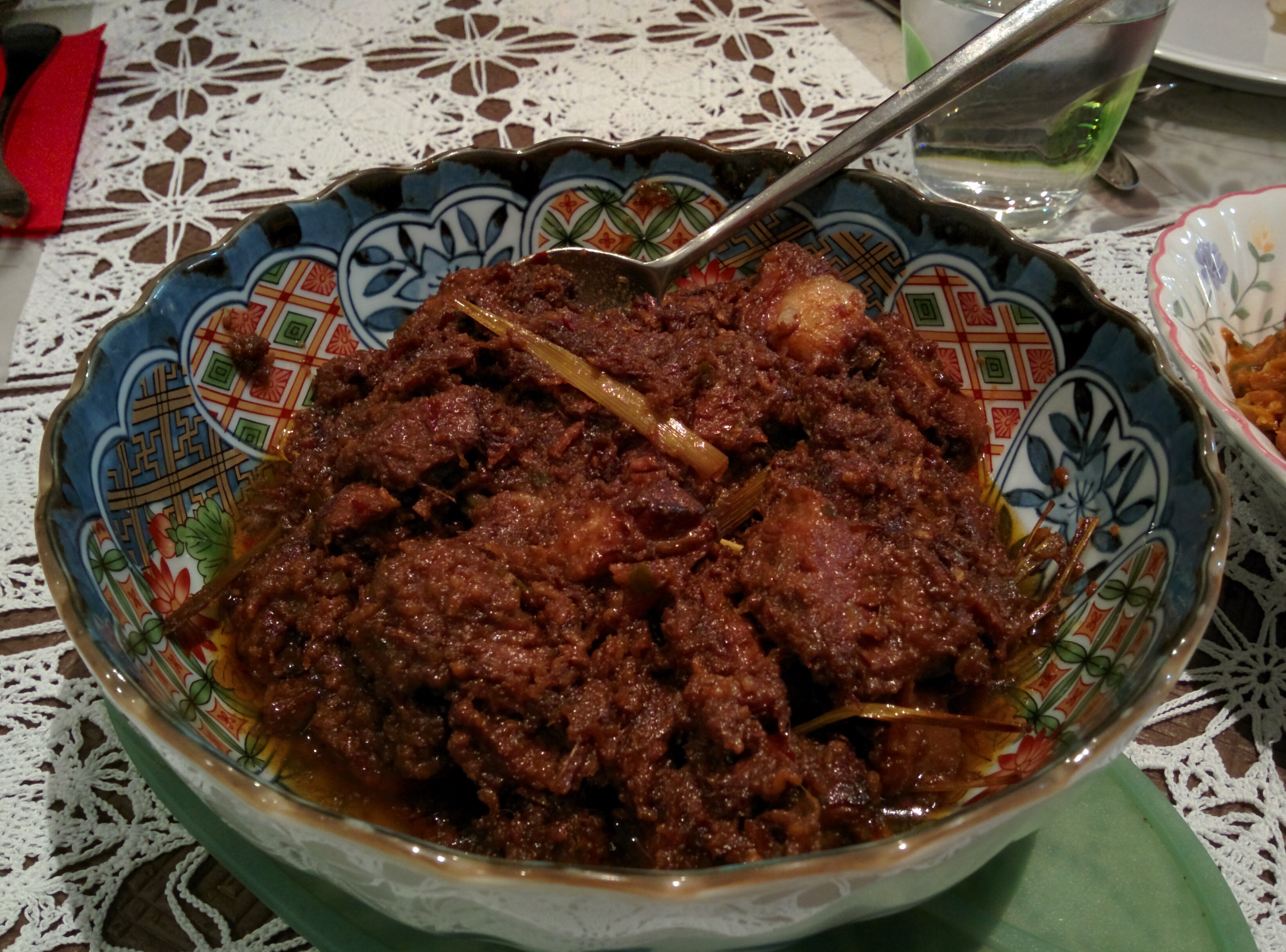
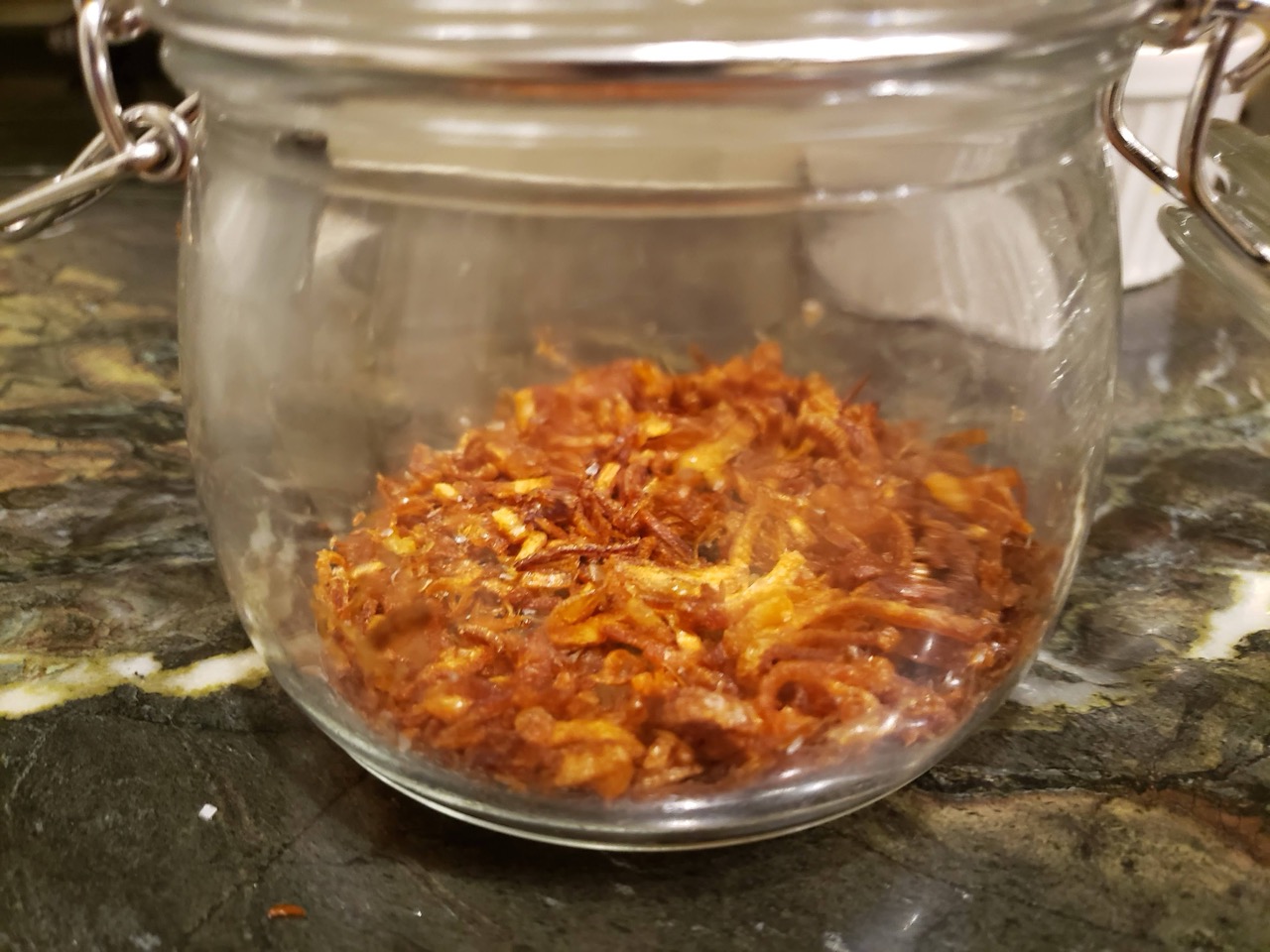
Kerasik is a grated, pan-toasted, and pounded fresh coconut, often used to thicken dishes such as rendang. Aside from rendangs and curries, kerisik may also be sprinkled on top of vegetable dishes and salads.
Note that though store-bought grated desiccated coconut may be substituted for the fresh coconut, it lacks the moisture and sweetness of freshly grated coconut meat.
The kerisik may be refrigerated for two weeks in a glass jar or Ziploc bag, or it can be frozen for several months. The following recipe is from Serious Eats.
INGREDIENTS
- Whole coconut or grated desiccated coconut (if using grated coconut, go straight to step 3)
STEPS
-
Selecting and breaking down the coconut: You want a mature, compact specimen with abeige to dark brown exterior. Younger coconuts have a softer, pudding-like flesh, whereas for our purposes, you’ll need a coconut with firmer interior. Select a heavy coconut and shake it about: you should be able to hear the liquid moving inside. To crack the coconut open, take either a heavy cleaver or a hammer and a nail, and find one point on the coconut to hack. If you’re using a cleaver, use the bottom tip and give the coconut a few heavy thwacks until a fissure forms on the shell. If you’re using a hammer and a nail, place the nail in a textured groove somewhere on the shell, and hammer away untilthe fissure forms. Once you’ve punctured a whole into the coconut, release the inner juices. The coconut water should taste fresh and sweet. Separate the meat from the shell with a relatively thin paring knife, making circular motions underneath the meat.
-
Grating the coconut: The best way to grate the coconut is to use a high quality microplane grater, as you would for cheese. Doing so will give you fine, lacy shreds of coconut meat that are ideal for even toasting. You could also cut the coconut into 1/2-inch chunks and run them through a food processor until they are finer and fluffy, approximately 1 minute.
-
Toasting the coconut: Place the grated coconut meat in a dry frying pan or wok over medium heat. Toast the coconut slowly, stirring around with a spatula to evenly disperse the heat. Continue to toast until the slivers of coconut are golden brown and toasty-smelling. Some slivers may toast more slowly or quickly than other slivers; don’t worry as long as the general distribution is golden brown, with perhaps a few darker and white slivers in the mix. The entire process, set over low heat, should take five to ten minutes. Transfer the toasted coconut to a bowl and allow to cool.
-
Grinding or pounding the coconut: Depending on your preferred consistency, either place the coconut meat in the food processor and pulse until it resembles sawdust (about one minute) or pound the coconut byhand in a mortar and pestle. For rendangs, leave the coconut shreds lightly pounded so that their unique juiciness and texture are still recognizable once mixed into the dish.