Duck paitan
A paitan (derived from the Chinese baitang, meaning white soup) is a Japanese style of emulsified stock. Rather than carefully simmering meat and bones to get a clear stock (chintan) as-in the French tradition, a paitan is cooked at a rolling boil — resulting in the bones and fat emulsifying into the stock, resulting in a rich, creamy, broth.
Often, a paitan can be made as a ‘second stock’ — simply take the leftover bones from making a clear chicken stock, add more water, and cook at a boil to make a paitan.
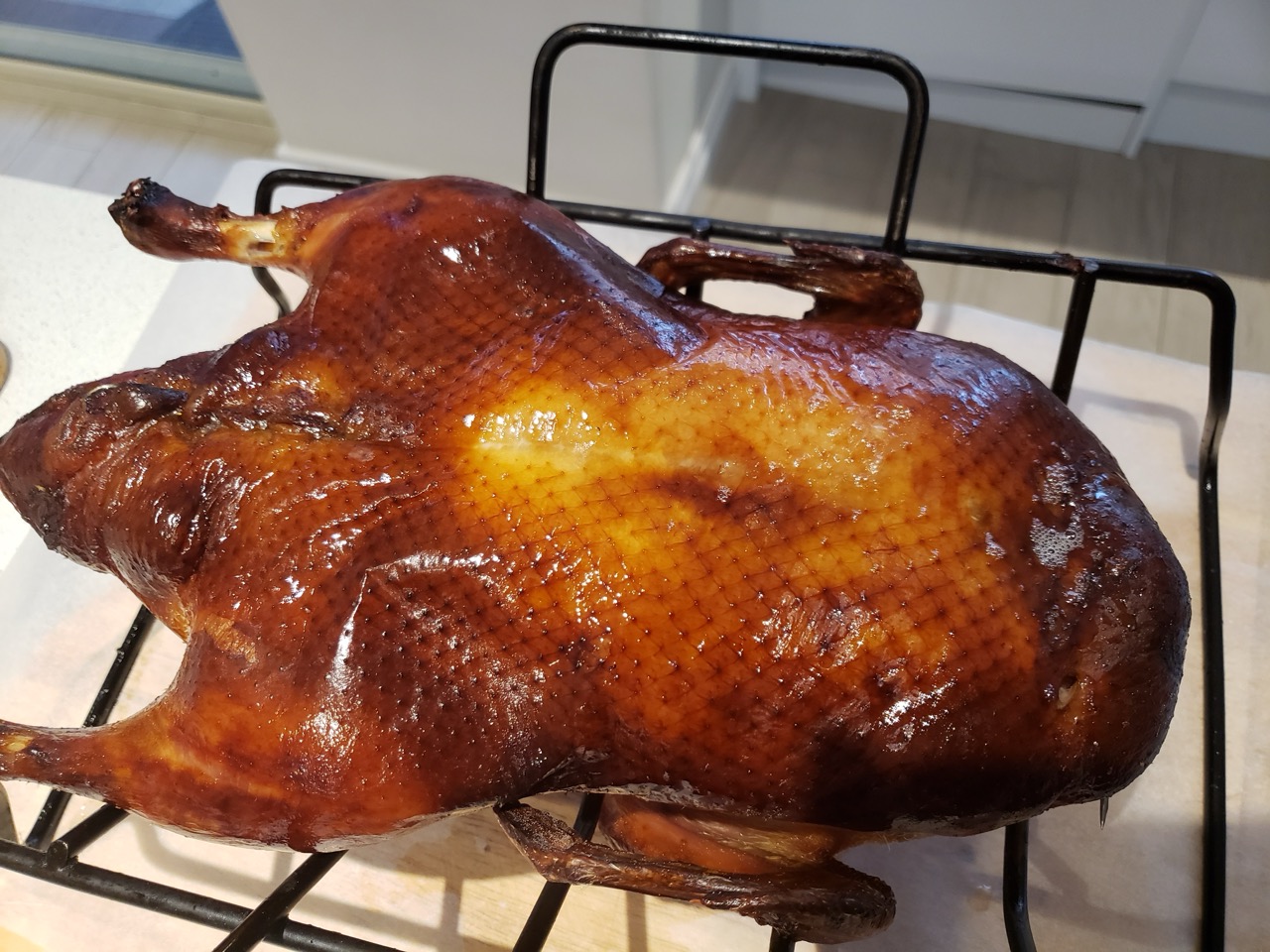
For this duck paitan, you can also choose to use a leftover Hong Kong style roast duck carcass as well, as I sometimes do. This lends the paitan a nice flavour of hoisin and five spice.
Asian-style stocks use typically fewer vegetables than western-style stocks — and especially for a paitan, adding vegetables is preferable towards the end of cooking. However here we add garlic and ginger for flavour, and potato for starch at the beginning, as the starch helps to maintain the emulsification.
INGREDIENTS
- ~1.5kg duck bones (chopped up or cut into smaller pieces using kitchen shears)1
- ~500g duck or chicken feet (toenails trimmed)
- 1 potato (russet or royal blue, chopped into small cubes)
- 1 inch ginger (thinly sliced)
- 4-6 garlic cloves
STEPS
-
Place the potato, ginger, and garlic cloves into a pressure cooker, followed by the duck feet, bones, and carcass. Fill with water to the maximum pressure cooker level (typically about 4.5L).
-
Pressure cook on high for 1.5 hours. When done you can choose to naturally release the pressure, or vent the pressure manually — it does not matter that the stock will be brought up to a rapid boil, as we are not aiming for a clear stock.
-
Transfer the contents to a large saucepan on the stove top on high heat (if you are using an InstantPot with stovetop-safe inner pot, simply move the pot to the stove), and allow it to come to a boil. Leave for 30 minutes. At this stage, emulsification should have started — the broth will appear a milky white colour, however if left fat will likely still separate and rise to the top.
-
The bones should now be soft enough that they are vulnerable to a squeeze of tongs. Using an immersion blender, blend the contents of the pot (stock, bones and all!). The emulsification will now appear much more stable — if you would like, you can continue to boil for another 30 minutes to 1 hour, regularly topping up the water level and stirring to ensure the sediments don’t burn on the bottom.2
-
Strain the paitan through a fine-meshed sieve (or a sieve lined with cheesecloth) into a metal bowl. Allow to cool, and then transfer into 2 cup portions and freeze.
NOTES
It is normal for the paitan to separate while freezing. To bring it back together, simply bring it to a rapid boil. To help bring back the emulsion faster, you can also use an immersion blender.
This recipe is inspired by the Tori Paitan stock from Homemade Ramen, as well as the Peking duck ramen from the Art of Escapism Cooking. The former adds carrots, onions, leeks, and scallions at the end for a short simmer (as well as adding 120ml of cold kombu dashi), while the latter roasts the duck bones with a glaze, and uses daikon instead of potato.
You can include cooked or raw duck. If you would like, roasting the duck bones and feet for 1 hour at 180ºC with a marinade of 1 tbsp of honey and 1 tbsp of water before starting will make a delicious roasted duck paitan. ↩︎For an even stronger emulsion, you can transfer some of the contents to a blender, blend until smooth, and then transfer back to the pot. ↩︎