Pâte sablée
A crumbly, delicate pastry — the standard for sweet tarts. Pâte sablée is based on the concept of sablage — coating the flour with a fat, butter — which results in a very short texture.
To scale this recipe up and down, simply remember the ratio 3:2:1 — 3 parts flour, 2 parts butter, 1 part sugar.
Note that pâte sablée is quite difficult to work with (it can crack quite easily while rolling it out), so adding an egg or egg yolk, and increasing the amount of flour (e.g., adding 50% more plain flour, as well as adding almond flour, and using a whole egg rather than just the yolk) can help make it easier to work with1.
INGREDIENTS
- 300g plain flour
- 200g cold unsalted butter (in 1cm cubes)
- 100g caster sugar
- 1 tsp kosher salt
- 1 egg or egg yolk (optional)
- 40g almond flour (optional)
STEPS
Using an electric mixer
-
Sablage: Using an electric mixer fitted with the paddle attachment, combine the flour (including the almond flour if using), salt, and butter on low speed for 2-3 minutes, until the clumbs of butter are evenly dispersed and the mixture resembles bread crumbs.
-
Scrape down the bowl and add the sugar and the egg (if using), and mix until well combined.
-
Transfer the pastry to a work surface and shape into a disc. Cover in plastic wrap and refrigerate for at least 2 hours.
By hand
-
Mix the flour, almond flour (if using) and salt, and place in a mound on the work surface with a well in the middle.
-
Sablage: Place the butter into the well, and mix the butter into the flour by rubbing your hands together until the mixture resembles course breadcrumbs.
-
Fraisage: Shape the mixture into a mound again, and make another well. Add the sugar and egg/yolk (if using), and use your fingertips and the heels of your palm to push the mixture across the table. Avoid kneeding, this will develop gluten and toughen the pastry.
-
Shape into a disc. Cover in plastic wrap and refrigerate for at least 2 hours.
Blind baking
-
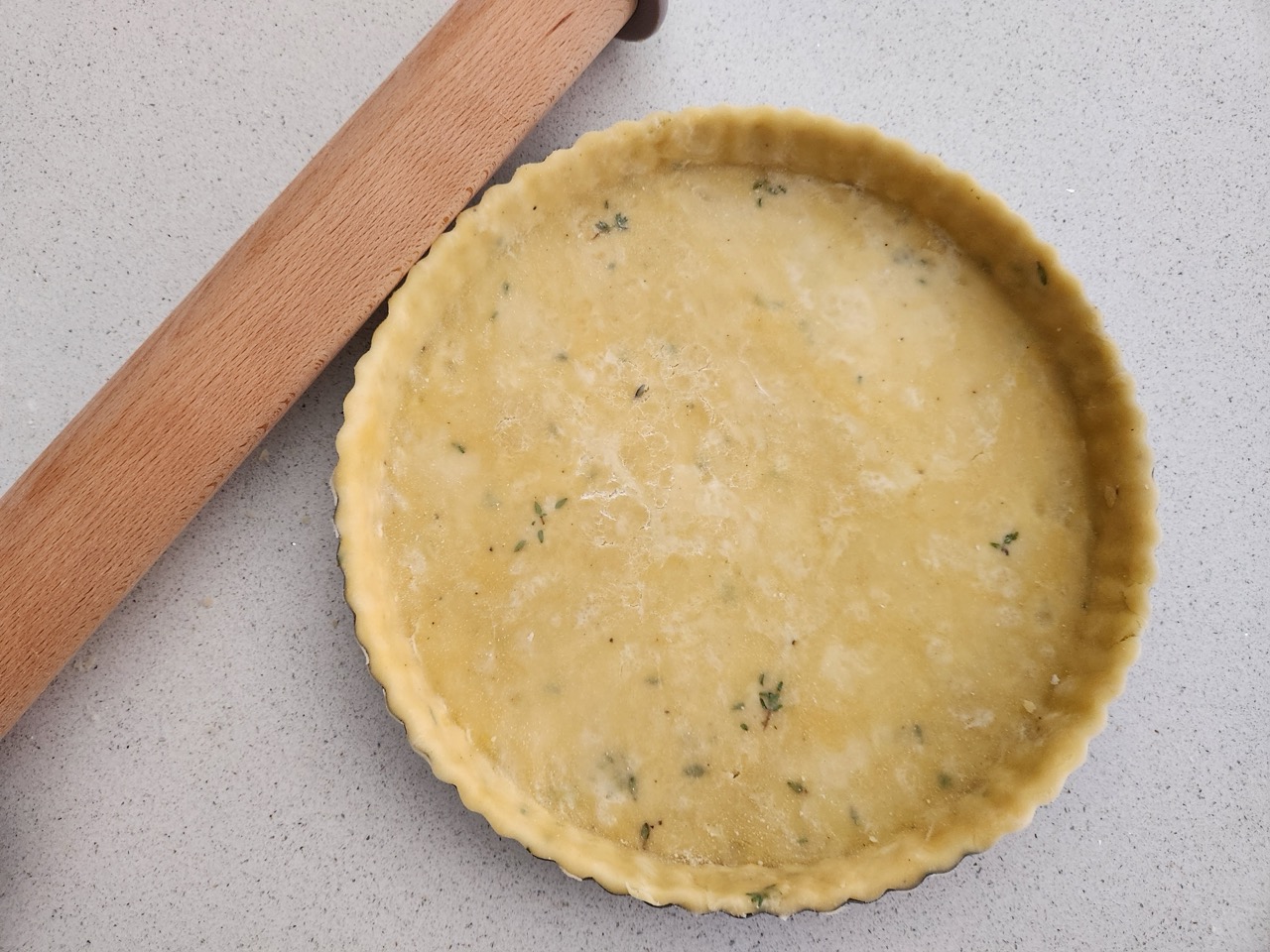
Roll the dough out (ideally between two pieces of baking paper/silpats, to avoid needing to use excessive flour) until about the size of the tart pan + an additional 3 cm.
-
Either use the silpat, a rolling pin, or the removable bottom of the tart pan to get the pastry into the pan.
-
Lifting the edges of the pastry, allow it to drop and push it into the corners of the tart pan — you can use a pastry brush to apply even pressure. Avoid stretching the pastry, as this can result in excessive shrinkage during baking.
-
Run a knife around the tart shell to remove excess pastry. Dock the bottom of the pastry with a fork, wrap with plastic wrap, and place in the fridge to chill for about 30 minutes to 1 hour.
-
Preheat the oven to 180-200ºC with rack set in middle position. Scrunch up a piece of baking paper (aluminium foil also works, but tends to stick), and fill the tart evenly with baking beads, rice, or dried beans.
-
Bake for 20 minutes, remove the baking beads, and bake for another 5 minutes until the pastry is golden and dry to the touch.
NOTES
-
Substitute 60g of the flour with unsweetened cocoa powder to make chocolate pâte sablée.
-
Substitute 10% of the flour with cornflour (corn starch) and do not add the egg yolk to make shortbread.
For example, Nagi from Recipe Tin Eats uses a 4.5:2:1 ratio for the pastry in her blueberry almond tart. ↩︎