Rough puff pastry
Rough puff (also known as blitz puff) is a method of approximating puff pastry where the butter is incorporated directly into the dough using large sheets of butter. The dough will start off looking very rough and shaggy, but by the time you have rolled it out and performed several folds, it will be smooth and cohesive.
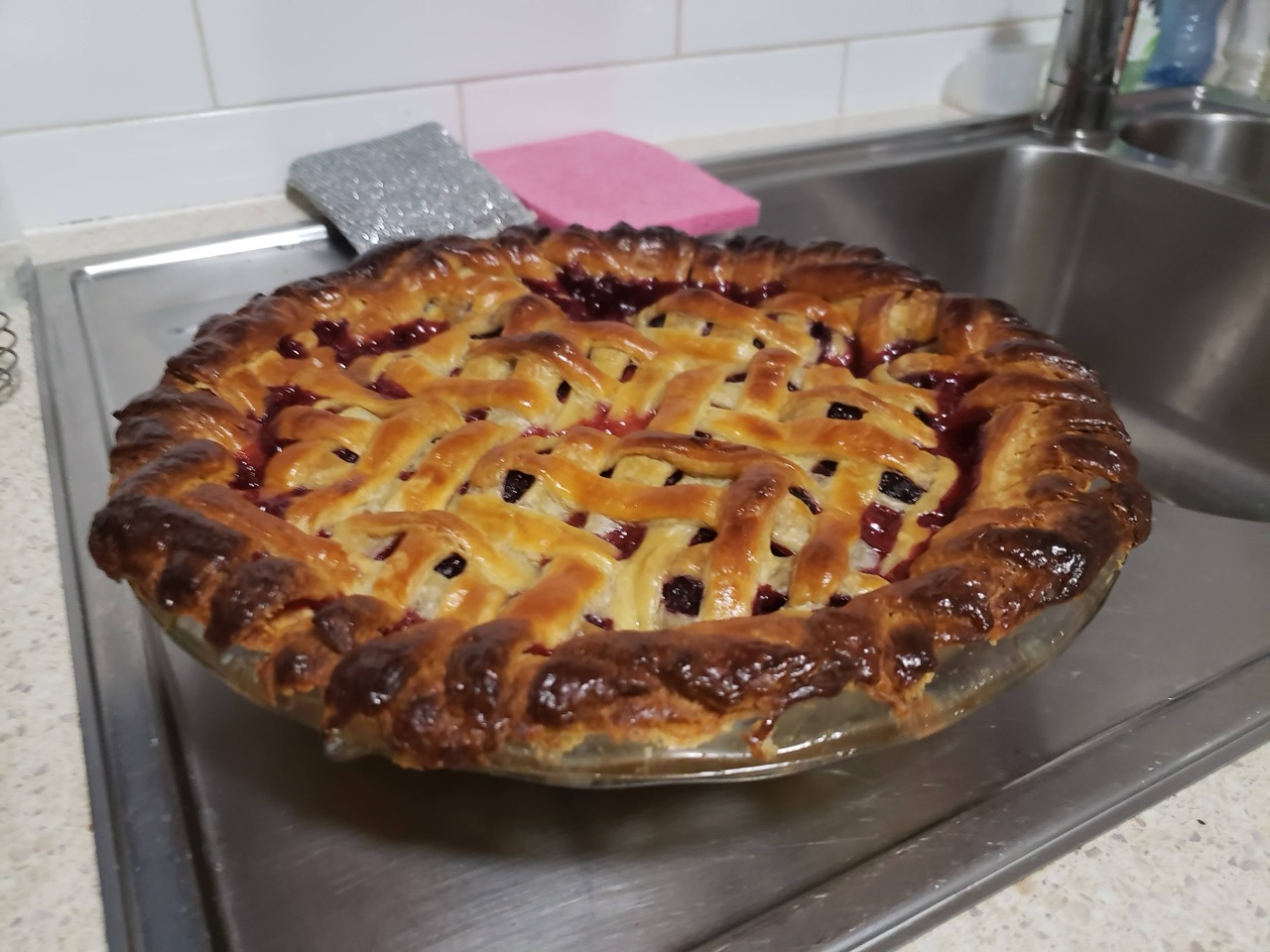
Rough puff is great when a recipe calls for puff pastry, but clear separation between the layers is unecessary — as a result it is my go-to pastry for an old-fashioned American flaky fruit pie.
To scale this recipe up and down, simply remember the ratio 2:2:1 — 2 parts flour, 2 parts butter, 1 part water. For example, to make 1kg of rough puff pastry, simply use 400g of flour, 400g of butter, and 200g of water.
INGREDIENTS
- 225g plain flour (plus more for dusting)
- 225g unsalted butter (cold, cut into 1/2 inch cubes)
- 115g cold tap water
- 15g (1 tbsp) sugar
- 1 tsp (4g) kosher salt
STEPS
Mixing the dough
-
For the Dough: Whisk flour, sugar, and salt together in a medium bowl. Toss the cubed butter with the flour mixture to break up the pieces. With your fingertips, smash each cube flat into a sheet — no rubbing or cutting1.
-
Stir in water, then knead dough against the sides of the bowl until it comes together in a shaggy ball. Dough temperature should register between 18 and 21ºC; if not, refrigerate for about 30 minutes before rolling and folding.
Folding
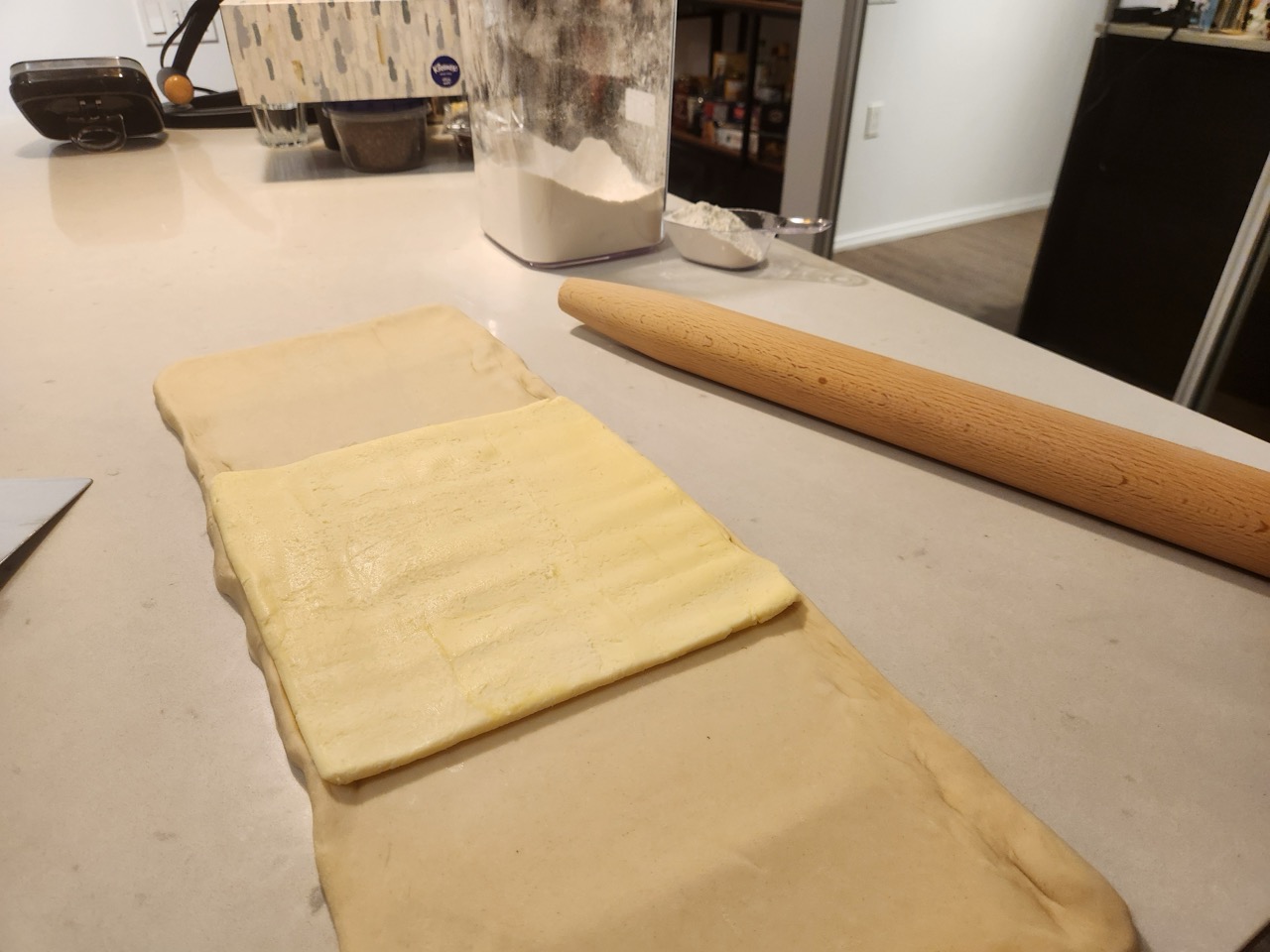
- On a generously floured work surface, roll dough into a roughly 10 by 15 inch rectangle. Fold the 10-inch sides to the center, then close the newly formed packet like a book (a book fold). Divide in half with a sharp knife or bench scraper. Dough temperature should still be somewhere between 18 and 21ºC; if not, refrigerate for about 30 minutes before proceeding2.
Single crusted pies
- Roll one piece into a 14-inch circle; this size allows ample room to line the pie plate, with enough overhang to form a generous border. Transfer to a 9-inch pie plate. Dust off excess flour with a pastry brush, using it to nestle dough into the very corners of the pan. With scissors or kitchen shears, trim the edge so that it overhangs by 1 1/4 inches all around. Fold overhang over itself to create a thick border that sits on the top edge of the pie plate, not below. Crimp or shape crust as desired. Repeat with remaining dough. Wrap with plastic and refrigerate at least 2 hours and up to overnight. Use as directed in your favorite recipe.
Double crusted pies
- For a solid top crust, roll remaining dough as before; for a lattice-top pie, roll into a 10 by 15-inch rectangle instead. Transfer to a baking sheet or parchment-lined cutting board. Wrap both portions in plastic and refrigerate at least 2 hours and up to overnight. Use as directed in your favorite recipe; after filling the pie and sealing the crusts together, refrigerate 30 minutes before baking.
Blind baking
-
Preheat the oven to 180-200ºC with rack set in the lower-middle position. Scrunch up a piece of baking paper(aluminium foil also works, but tends to stick), and fill the pie evenly with baking beads, rice, or dried beans.
-
Bake for about 60-75 minutes until set and golden around the edges. Remove the baking beads, and bake for another 5 minutes until the pastry is golden and dry to the touch.
NOTES
The dough can be made ahead of time and refrigerated for up to 24 hours before use. To store it for longer than that, the dough can be frozen as a block, rolled, or shaped in a pan. If frozen as a block, dough will still need to rest/relax for at least 2 hours after rolling and shaping.
You can also use a stand mixer with the paddle attachement on the butter and flour mixture until an uneven crumb mixture forms with large pieces of butter. However, you won’t get as flaky a result. ↩︎You can perform additional folds here if you want more layers. For example: 1 letter fold, and 2 book folds, with 15-30 minutes of chilling between each fold. ↩︎