Shoyu tare
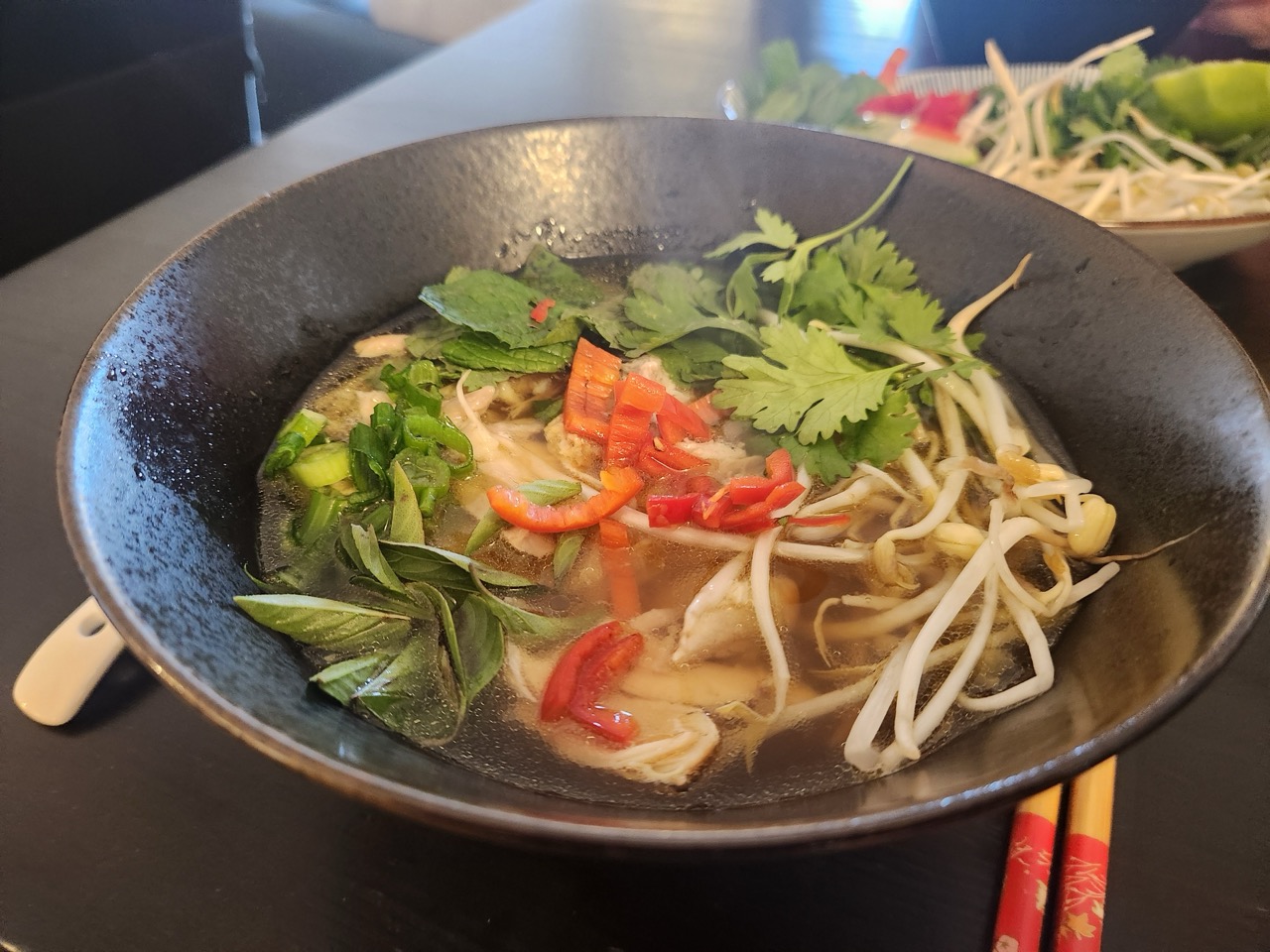
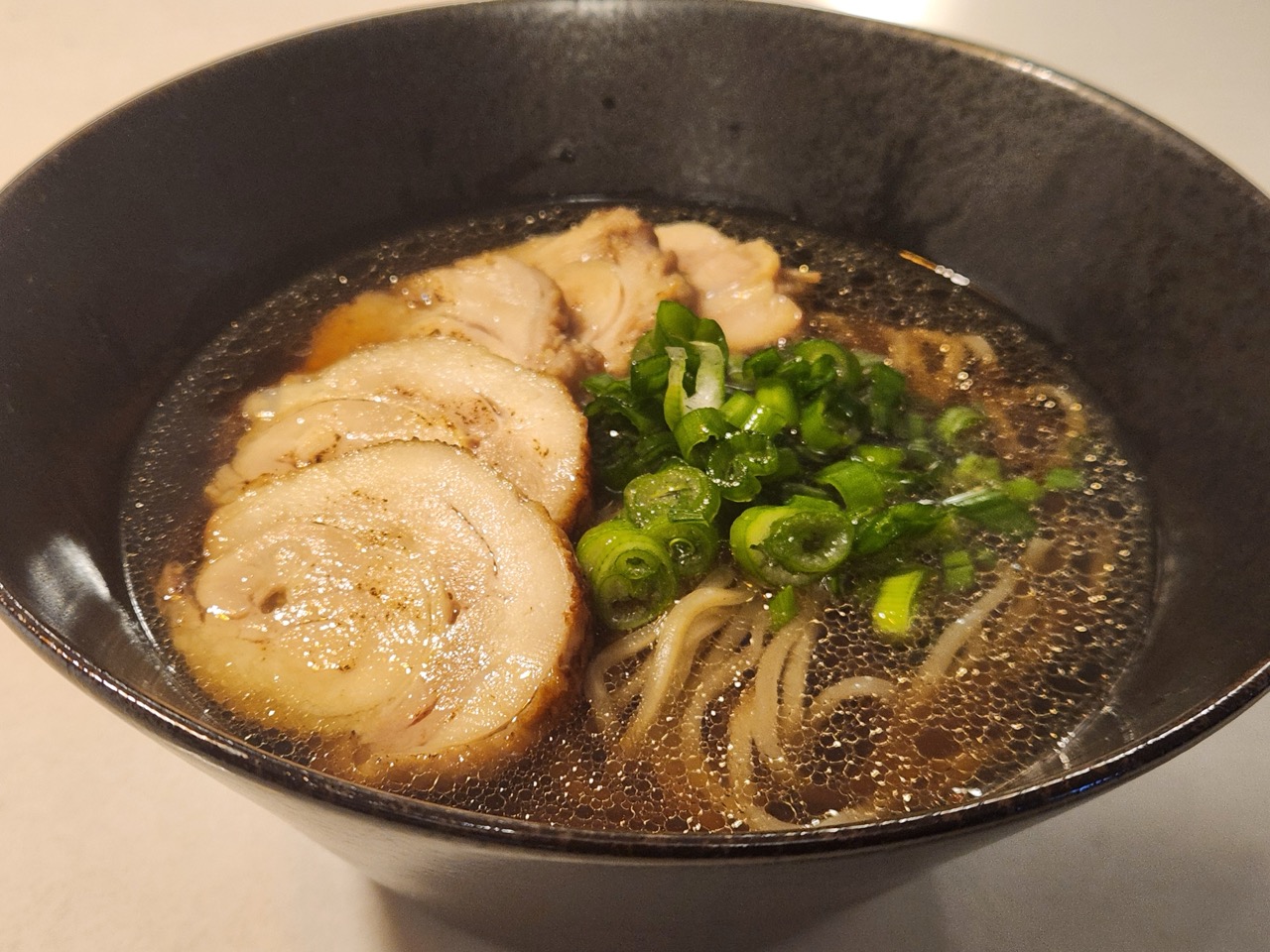
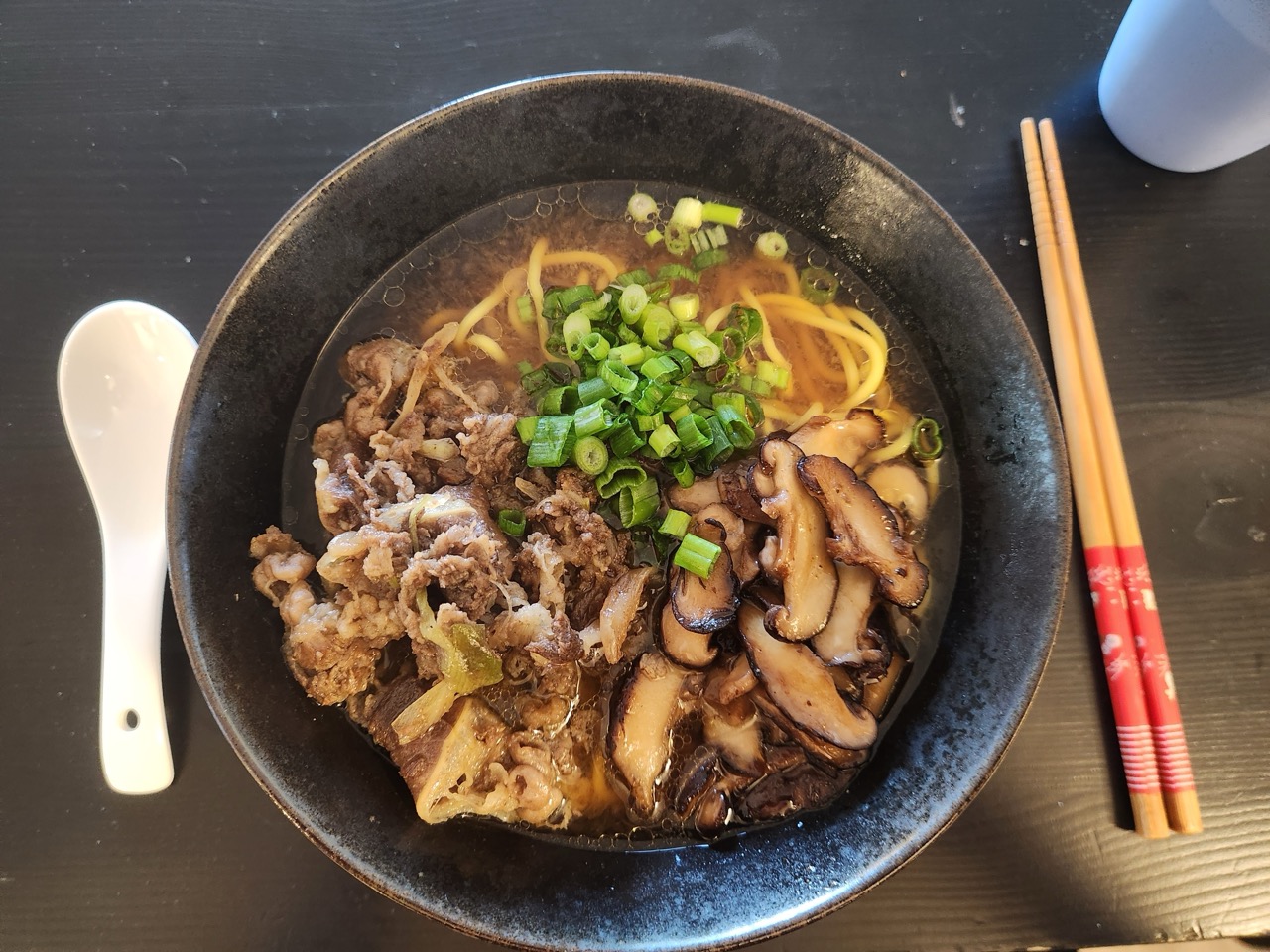
Tare is used to season a bowl of ramen with salt (and often umami), as ramen stocks are typically unsalted.
Shoyu tare is similar to a seasoned soy sauce in Chinese cuisine, but involves processes and ingredients from Japanese cuisine to really ramp up the savoury notes and flavours. The kombu adds glutamates, the katsuobushi inosinic acid, and the dried shiitake adds guanylic acid — producing a smokey, well-rounded savoury flavour that you can’t get from solely MSG.
The typical ratio for a bowl of ramen is 130g noodles, 300-350ml stock, 30ml tare, and 15-30ml of aromatic fat. As well seasoned food is usually about 1% salt by weight, a tare is usually about 10% salt by weight.
This tare is based on one from Sho Spaeth’s Homemade Ramen.
INGREDIENTS
- 600ml soy sauce (divided into 240ml and 360ml)1
- 6g kombu
- 4g dried shiitake mushrooms (about 3-4)
- 300ml sake
- 6g katsuobushi
- 60ml mirin
- 9g salt
STEPS
-
Combine 240ml of soy sauce with the kombu and dried shiitake mushrooms in a small container. Cover and leave to steep overnight in the fridge for up to 12 hours (minimum 6 hours).
-
Add the sake to a 2L saucepan, and cook over medium-high heat until the sake has reduced to about a tablespoon, and the bubbles that are forming are quite large (7-8 minutes).
-
Add the steeped kombu and shiitake soy sauce to the reduced sake and cook until small bubbles form around the edge (about 1 minute). The mixture should be about 60ºC. Remove the kombu and discard.
-
Continue to cook until a bare simmer (around 85ºC). Remove from the heat, add the katsuobushi, and steep for 5 minutes.
-
Drain through a fine-meshed sieve, pressing on the solids to remove as much liquid as possible. Add the remaining 360ml of soy sauce, mirin, and salt, stirring to dissolve. Store in an air-tight container in the fridge.
NOTES
- As tare is incredibly salty, they will keep stored in the refrigerator for a very long time.
There are several different types of Japanese soy sauce. Koikuchi (dark soy sauce) is the type commonly found outside of Japan (similar to Chinese light soy sauce). Usukuchi (light soy sauce) has a paler amber colour, so is great when you want to preserve the colour of the final dish (e.g., if making a tori paitan), but is actually 10% saltier so the amount of salt should be adjusted. Shiro (white soy sauce) is more commonly used in shio tare. ↩︎