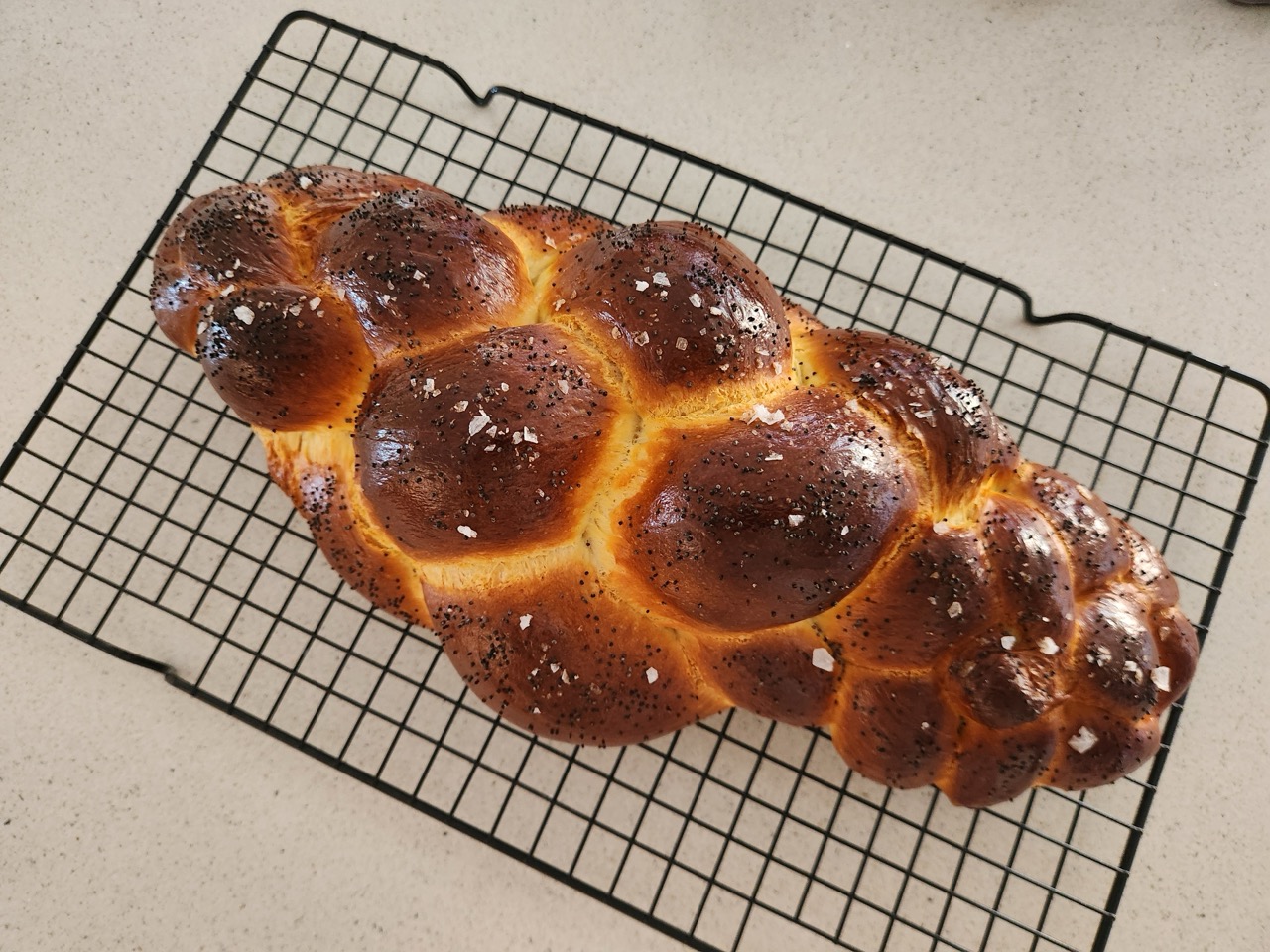
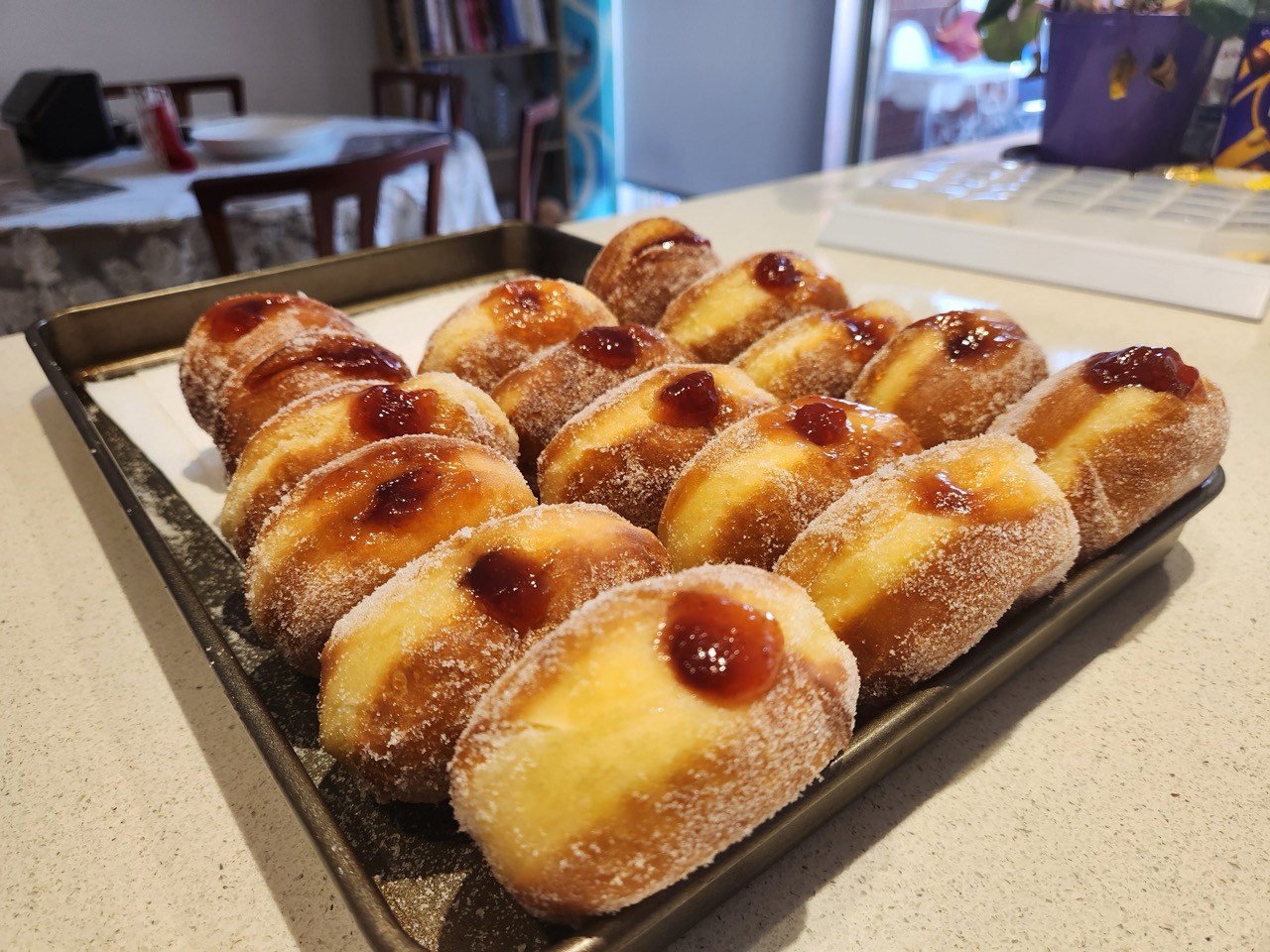
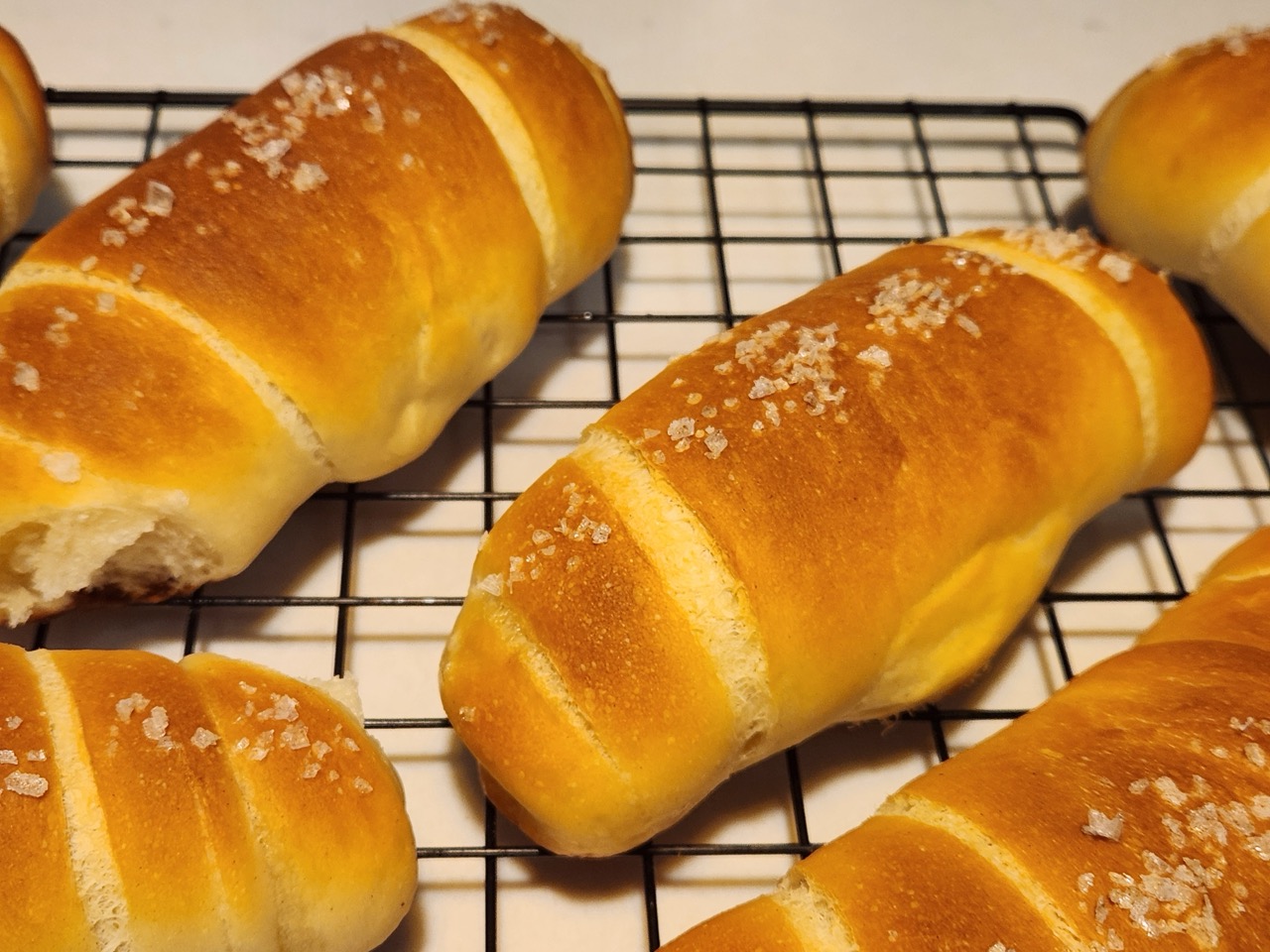
Babka
Babka’s are a showstopper when bought to a dinner party. A cross between a bread and a cake, you can go pretty crazy on the filling (and even reduce the sugar in the brioche dough to about 10g or less, and skip the sugar syrup step, to make a savoury babka — with fillings such as pesto; garlic, butter, herbs and cheese, etc.). Adapted from Ottolenghi’s Jerusalem.
Cooking Schedule
INGREDIENTS
- 530g all-purpose flour, plus extra for dusting
- 100g sugar
- 10g yeast
- Grated zest of 2 lemons
- 3 large eggs
- 120ml water
- 1/2 teaspoon salt
- 150g unsalted butter (room temp, cut into 2cm cubes)
- Neutral oil for greasing
Filling
A paste, butter, or even streusal mixture to fill the babka with.
{{filling_list}}
Sugar syrup
- 160ml water
- 260g sugar
STEPS
-
Mix yeast, warm water, eggs, salt, lemon zest, and sugar in the bowl of a stand mixer. Using the dough hook, beat on medium-low until mixture is combined.
-
Add flour, and mix on medium speed until dough comes together, 2-3 minutes. Add butter, adding a few cubes at a time, mixing until incorporated. Continue mixing for about 10 minutes on medium speed, until dough is completely smooth, elastic, shiny, and pulls away from the sides of the bowl. During mixing, you will need to scrape down the sides of the bowl.
-
Place dough in a large bowl brushed with oil, cover with plastic wrap, and leave in the fridge for at least half a day or overnight.
-
Grease two 1kg loaf pans (9x4 inch/23x10 cm) with oil and line the bottom of each pan with waxed paper. Divide dough in half and keep one half covered in the fridge.
{{filling_step}}
Shaping
-
Roll out dough on a lightly floured surface and shape into a rectangle measuring 15x11 inches (38x28 cm). Position dough so that a long side is closest to you. Using an offset spatula, spread half of the {{filling}} over the rectangle, leaving a 2 cm border all around.
-
Use both hands to roll up the rectangle like a roulade, starting from the long side closest to you and ending at the other long end. Press to seal the dampened end onto the roulade, then rest the on its seam.
-
Trim about 2 cm off both ends of the roulade with a serrated knife. Then use the knife to gently cut the roll in half lengthwise, starting at the top and finishing at the seam, essentially dividing the log into two long even halves, with the layers of dough and filling visible along the length of both halves. With the cut sides facing up, gently press together one end of each half, then lift the right half over the left half. Repeat this process, but this time lifting the left half over the right, to create a simple two-pronged plait. Gently squeeze together the other ends so that you are left with the two halves, intertwined, showing the filling on top. Carefully lift the cake into a loaf pan. Repeat to make the second loaf.
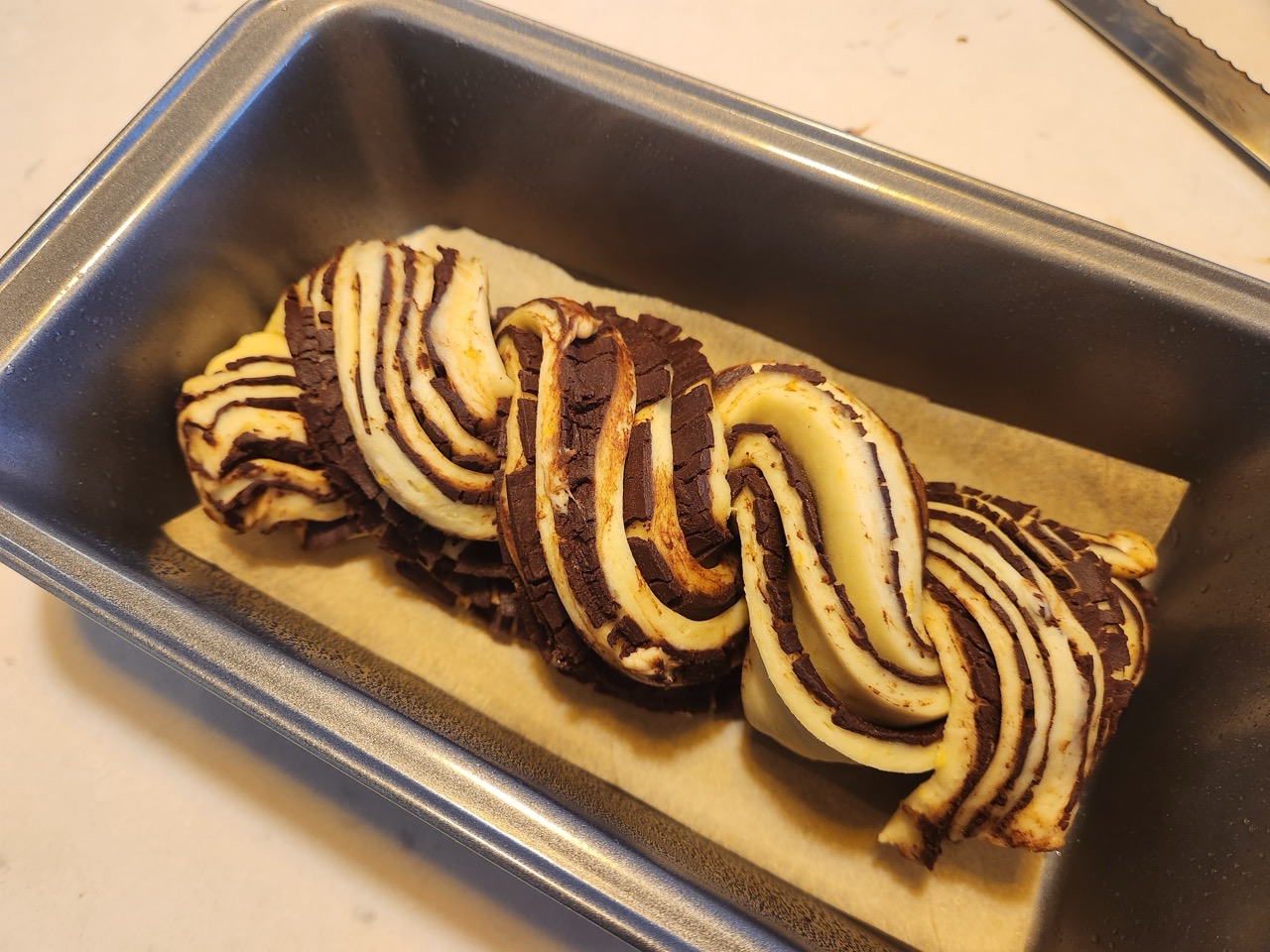
-
Cover the pans loosely with plastic wrap or a wet tea towel and leave to rise in a warm place for 1 to 1.5 hours.
-
Preheat oven to 190ºC. Remove plastic wrap or tea towels, place cakes on middle rack of oven, and bake for about 25-30 minutes, until a skewer inserted into the center comes out clean with no dough attached.
-
While the cakes are in the oven, make the syrup. In a small saucepan over medium heat, bring water and sugar to a boil. As soon as the sugar dissolves, remove from heat and set aside to cool.
-
As soon as the cakes come out of the oven, brush the syrup over them. Use all of the syrup, even if it looks a lot. Let cakes cool until they are warm, then remove from pans and let cool completely before serving. Serve warm or at room temperature with vanilla bean ice cream.
NOTES
-
Babka will stay fresh for 24 hours in an airtight container at room temperature. Don’t place in the fridge.
-
Babka freezes well for up to 2 months. To thaw, leave on counter or overnight in the fridge.
-
For a dairy free babka, replace the dough recipe here with challah dough, scaled up 1.5x to make 2 babkas. However, you can keep the amount of water the same and simply switch to using 3 whole eggs.