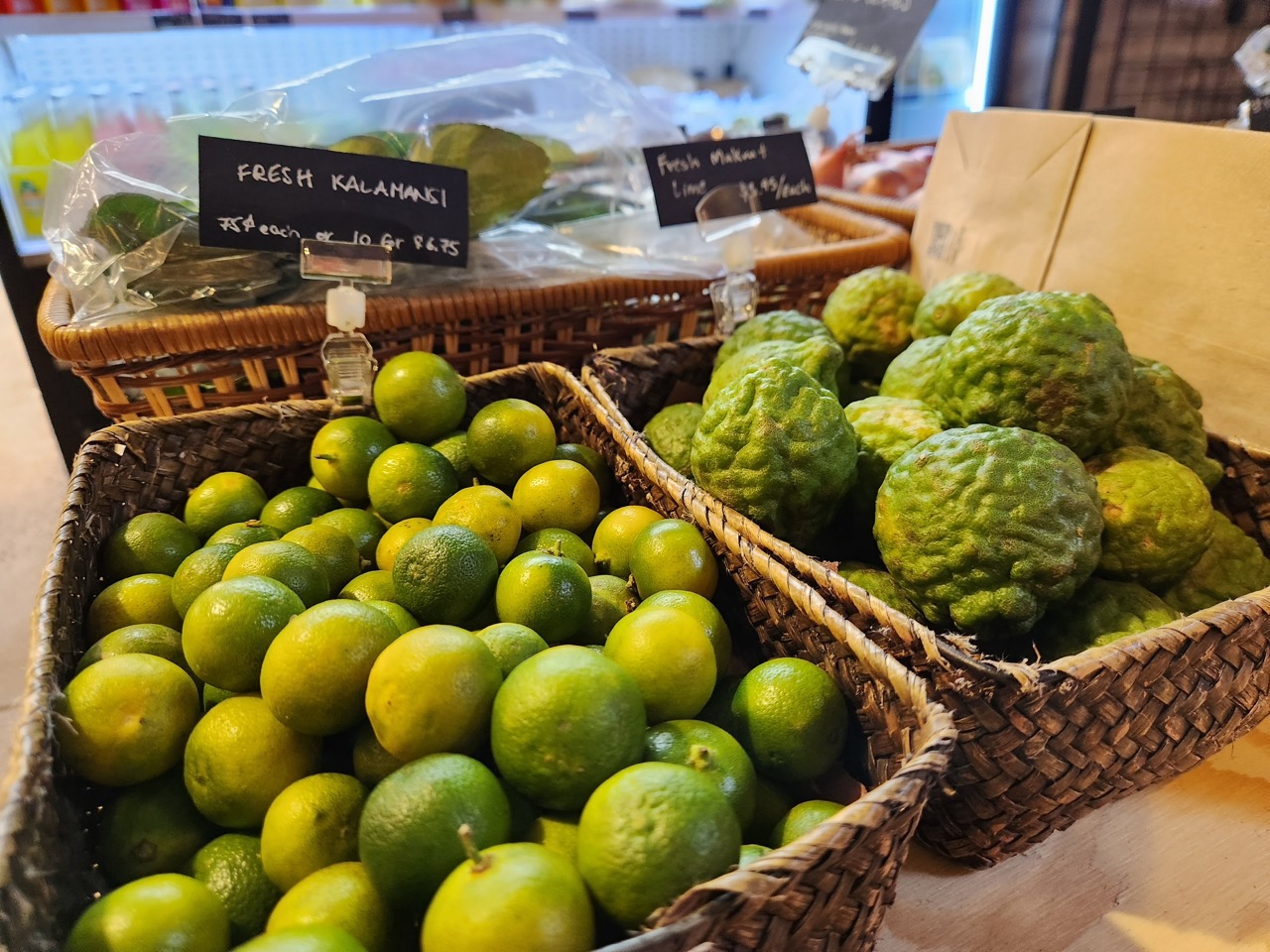
There is a specific, sharp mist that hangs in the air when you slice into a calamansi. The fruit is small, usually no larger than a marble, with a thin green skin that yields an abrasive, floral acidity — something halfway between a key lime and a sour mandarin1. Last week, standing in my kitchen, I halved a handful of them and squeezed their juice into a Dutch oven full of simmering chicken and okra2.
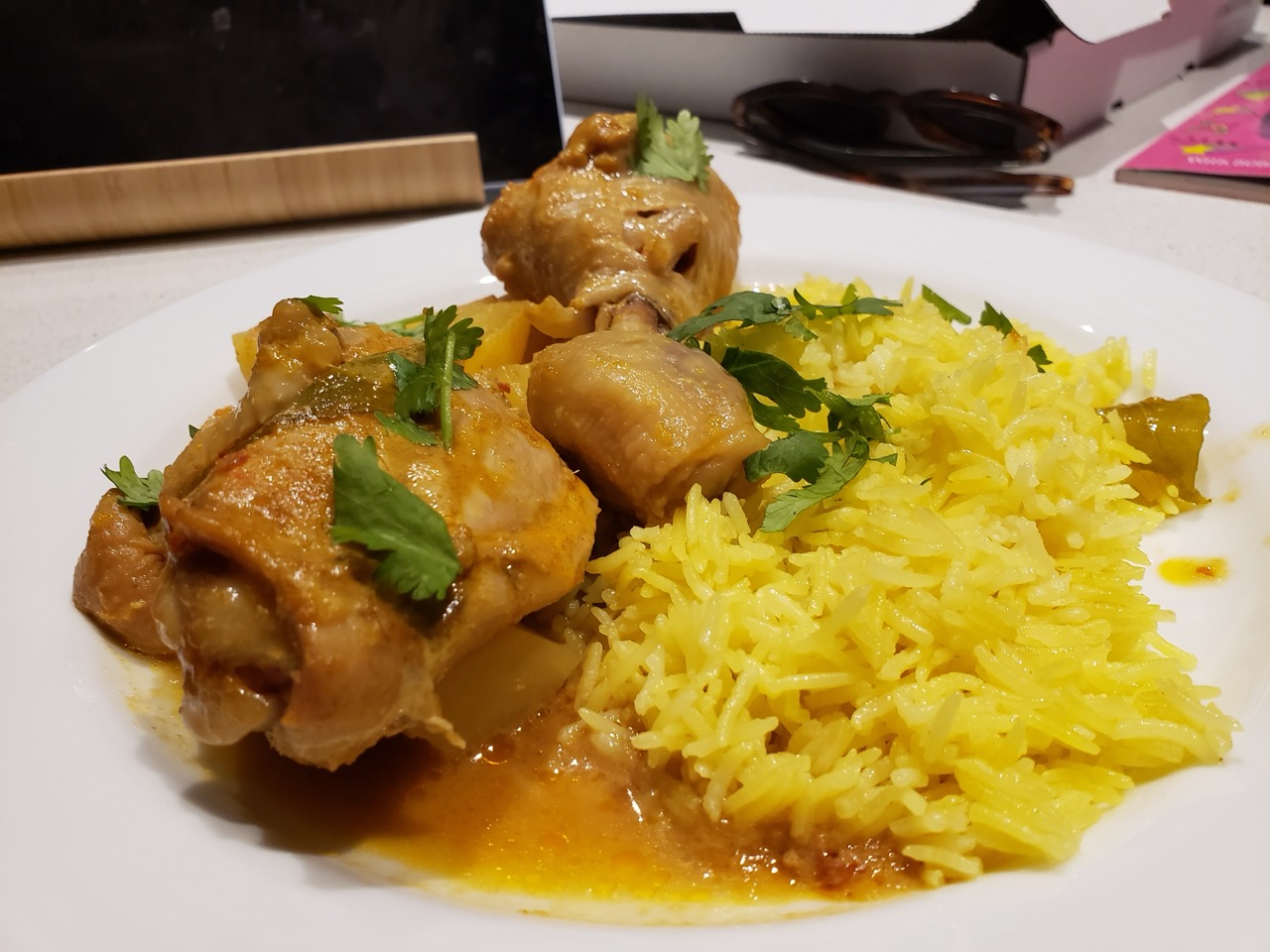
The dish was bamya asam. If you consult a standard cookbook, bamya is a Middle Eastern staple, a slow-braised lamb and okra stew whose character relies on a deeply savory tomato base heavily perfumed with garlic. In the middle east, its signature sourness comes from lemon juice (typical in Iraq or Anatolia), tamarind (as found in southern Iran), or can even be coaxed out of the dusty, fermented acidity of noomi basra — sun-dried black limes3.
My pot, however, smelled reminiscent of the Southeast Asian tropics.
I have written previously about the internet’s neurotic policing of culinary borders. God help the poor soul who posts a carbonara with a splash of cream on Reddit; you will be digitally excommunicated before the pasta water boils. Strangely enough, we tend to measure dishes we are less familiar with (or did not grow up with) with a level of cartographic exactitude. Meanwhile, the dishes we grew up with are deeply authentic to us, shaped by the subsitutions and tastes of our parents and grandparents.
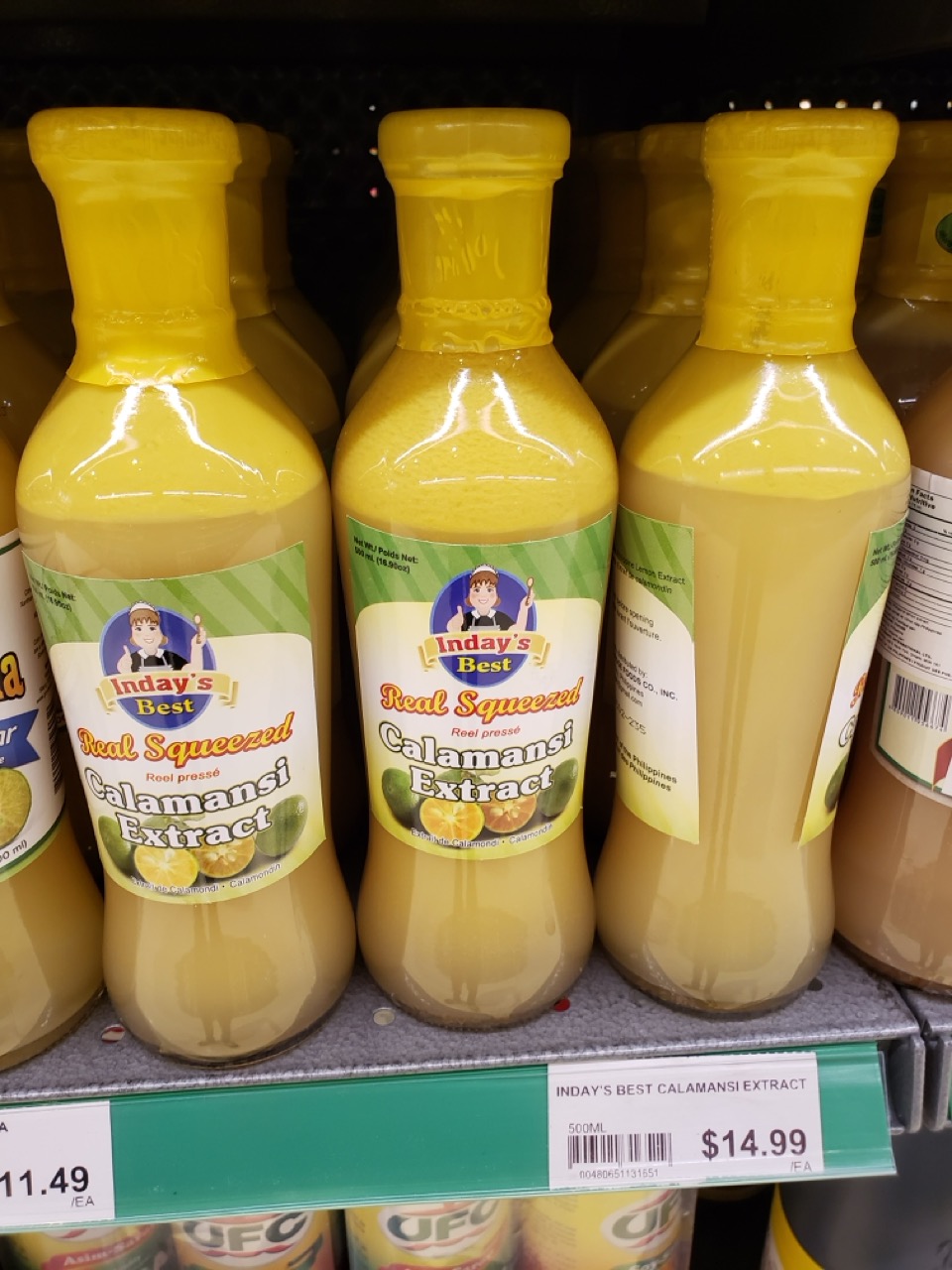
So why was I, an Australian in Toronto who grew up in Singapore, making a Middle Eastern stew with a citrus from the Philippines4? To trace the lineage of the stew bubbling on my stove requires engaging with a different metric entirely. It requires Plutarch. (I mean, not really. But I enjoy being superfluous.)
In the late first century, the Greek philosopher Plutarch recorded a thought experiment concerning the mythological King Theseus. If a wooden ship is preserved in a harbor, and over the decades its decaying planks are replaced one by one with new timber, is it still the ship of Theseus? When applied to diaspora cooking, the paradox is identical. If you cross an ocean and substitute a recipe’s ingredients to accommodate a new geography, at what point have you cooked an entirely different meal? Which one is the ‘authentic’ dish?
The Ship of Theseus paradox is so old it has become almost a cliché5, and these days is applied so often it loses a lot of its original wonder6. However, it’s a nice reminder that food authenticity is not very well defined. Variations of a dish exist in both space and time, turning a clear categorization into a messy (and beautiful) family tree.
And this is essentially the backstory of my Iraqi-Jewish-Singaporean stew. To understand why a tropical lime has any business being squeezed over an Iraqi stew, you have to trace a maritime route that spans centuries and oceans.
Beginning in the eighteenth and nineteenth centuries, Baghdadi Jewish merchants began leaving the Ottoman Empire. Following the trade winds of the opium and spice routes, they established thriving commercial hubs in India — primarily in Bombay, Cochin, and Calcutta. They brought with them the dietary laws of Kashrut and the culinary memory of the Tigris river valley.
Culinary memory does not easily survive migration unchanged. It doesn’t even survive stasis unchanged. Even back in Baghdad, the Jewish community had already differentiated their bamya from the standard Iraqi Muslim preparation. While standard bamya was very savory-sour, Iraqi Jews heavily favored a more sweet-and-sour (‘hamedh-helu’) profile, balancing the tartness of the dish with date syrup or sugar. The standard chunks of stewed lamb or beef were also often replaced with kubbeh (or kibbeh or kubba, depending on your preferences), a semolina dumpling containing minced beef.
When the diaspora reached India, Baghdadi Jewish households frequently employed local Indian cooks. This cross-cultural kitchen dynamic fundamentally altered the diaspora’s food; the cooks took that foundational sweet-and-sour instinct and matched it with local sugar and spices. The traditional stew underwent its first major metamorphosis, evolving into bamya khattah — a sweet-and-sour okra stew that mirrored the Baghdadi palate through an Indian lens (and could be when bone-in chicken pieces became much more common in the dish, as opposed to simply kubbeh). This also seems to be the point where fresh mint — thrown into the stew at the last minute — became a defining flavour profile, as opposed to an optional extra.
The ship, however, was not done sailing. As the British Empire’s trading network expanded, the Baghdadi Jewish community moved further east, eventually dropping anchor in the swampy heat of colonial Singapore7. It was a minuscule community that clustered around Waterloo Street and the whitewashed arches of the Maghain Aboth Synagogue8. When I pull my copy of The Jews of Singapore9 off the shelf, I can find my grandmother (and a significant part of my extended family) in its pages, a documented part of this tiny demographic anomaly.

After these merchants arrived in Malaya, and faced with the daily necessity of dinner, the community simply used what was there. The Indian-Jewish bamya khattah entered the vibrant, humid ecosystem of Singapore’s wet markets and underwent its final transformation into the dish of my childhood: bamya assam.
In the Malay language, assam translates to ‘sour’, and in regional cooking, it almost exclusively signals the heavy use of tamarind. But in my family’s Baghdadi-Singaporean vernacular, the word assam was adopted simply to describe the dish’s essential sweet-and-sour architecture. We didn’t use tamarind. Instead, to achieve that bright, necessary acidity — to replicate the hamidh-hilu of their ancestors — they relied on the calamansi.
It wasn’t a calculated, avant-garde culinary fusion. Nobody thought about it that hard. The calamansi was simply the default lime in Singapore. It was the wood they had, so it was the wood they used to rebuild the ship.
If you walked into a family Shabbat dinner during my childhood, there was a very strong chance bamya assam was on the table (alongside staples that always went with bamya, such as yellow rice and potato chop, another side-effect of Indian-Jewish cooking culture). Every aunt and cousin had a version that was deeply familiar, yet slightly different.
I would love to tell you a romantic, sepia-toned story about my grandparents and aunts painstakingly rolling kubbeh dumplings in the afternoon in preparation for Shabbat. In nineteenth-century Baghdad, Shabbat bamya actually was a deeply labor-intensive affair; Jewish cooks meticulously hand-rolled kubbeh and poached them in the simmering broth. The truth of my childhood is much more utilitarian. By the time the recipe reached my generation in Singapore, those labor-intensive dumplings were typically reserved for special occasions, with the standard stew containing whatever bone-in, skin-on chicken pieces were available. Another plank of the ship replaced. But the most striking reality of this diaspora dish is that the Jewish women of Singapore were rarely the ones sweating over the stove to make it.
To talk honestly about Singaporean food culture, you have to talk about the Foreign Domestic Worker (FDW) system (known locally as ‘maids’). Rapid economic growth in the late twentieth century pulled Singaporean women into the corporate workforce en masse, creating a structural reliance on live-in domestic helpers, primarily women from the Philippines and Indonesia. Today, nearly 1 in 5 Singaporean households employs a live-in domestic helper. For decades, they have been the silent engine of the country’s domestic life, effectively absorbing and maintaining the localized cuisines of the Chinese, Malay, Indian, and Eurasian families they live with.
With a few notable exceptions, most of my aunts did not cook. Instead, they taught the oral tradition of Iraqi-Jewish cuisine to their maids, who then took over the kitchens. My memories of bamya are not of my grandmother meticulously chopping okra. My memories are of Remy, our family’s Filipino maid, pulling the stew together. On Shabbats, when our entire extended family would congregate at someone’s house for dinner, I remember playing in the kitchen with the other kids while Remy, or my grandmother’s maids Tessie and Martini, worked. They tolerated our presence with a sharp, witty banter that immediately evaporated into polite deference the second our parents walked into the room.
And so we finish with an interesting, but perhaps unexpected, coda: a dish born in the river valleys of Iraq, heavily modified by Indian cooks in Calcutta, adapted for the tropics in Singapore using limes from the Philippines, was ultimately kept alive and cooked weekly by women from the Philippines and Indonesia.
A purist, sampling my childhood recipe, would likely declare the ship somewhat rebuilt. They would point to the calamansi, the utilitarian chicken, and the historical detours, arguing that the vessel is no longer purely Middle Eastern.
They would not be wrong, exactly. But they would be missing the point.
When we demand that recipes remain static, we ask them to do something human beings cannot do: ignore their surroundings. The bamya assam I grew up eating does not belong to a modern Baghdad it has never seen, nor is it indigenous to a Malay kampong. It is the taste of a very specific group of people figuring out how to survive in a place that was not theirs, delegating the labor of survival to women from yet another diaspora, and using whatever ingredients the market provided.
Authenticity, in this light, is not historical reenactment. It is a ledger of adaptation. It is the record of a family’s journey, written in okra and citrus. The final dish may be one that many people around the world recognize, but the specific sweet, sour, and minty notes are unlikely to be replicated in a restaurant. It is not ‘authentic’ to everyone, but it is deeply authentic to me.
I dropped the squeezed calamansi rinds into the bin, stirred the stew one last time, threw in (perhaps slightly too much) mint, and served it.
- The calamansi is actually a hybrid between a kumquat and (most likely) a mandarin. ↩︎
- I say okra now (because that’s the common name since moving to Australia), but growing up in Singapore I would have referred to these slimy vegetables as the lovingly descriptive lady fingers. ↩︎
- Noomi basra (literally “limes from Basra”) are made by boiling fresh limes in salt water and leaving them to dry on the desert sand until they turn rock-hard and black. The British East India Company’s supply chains favored spices that could survive months in a damp cargo hold; specialized, bulky ingredients like dried limes rarely made the cut for the Southeast Asian routes. ↩︎
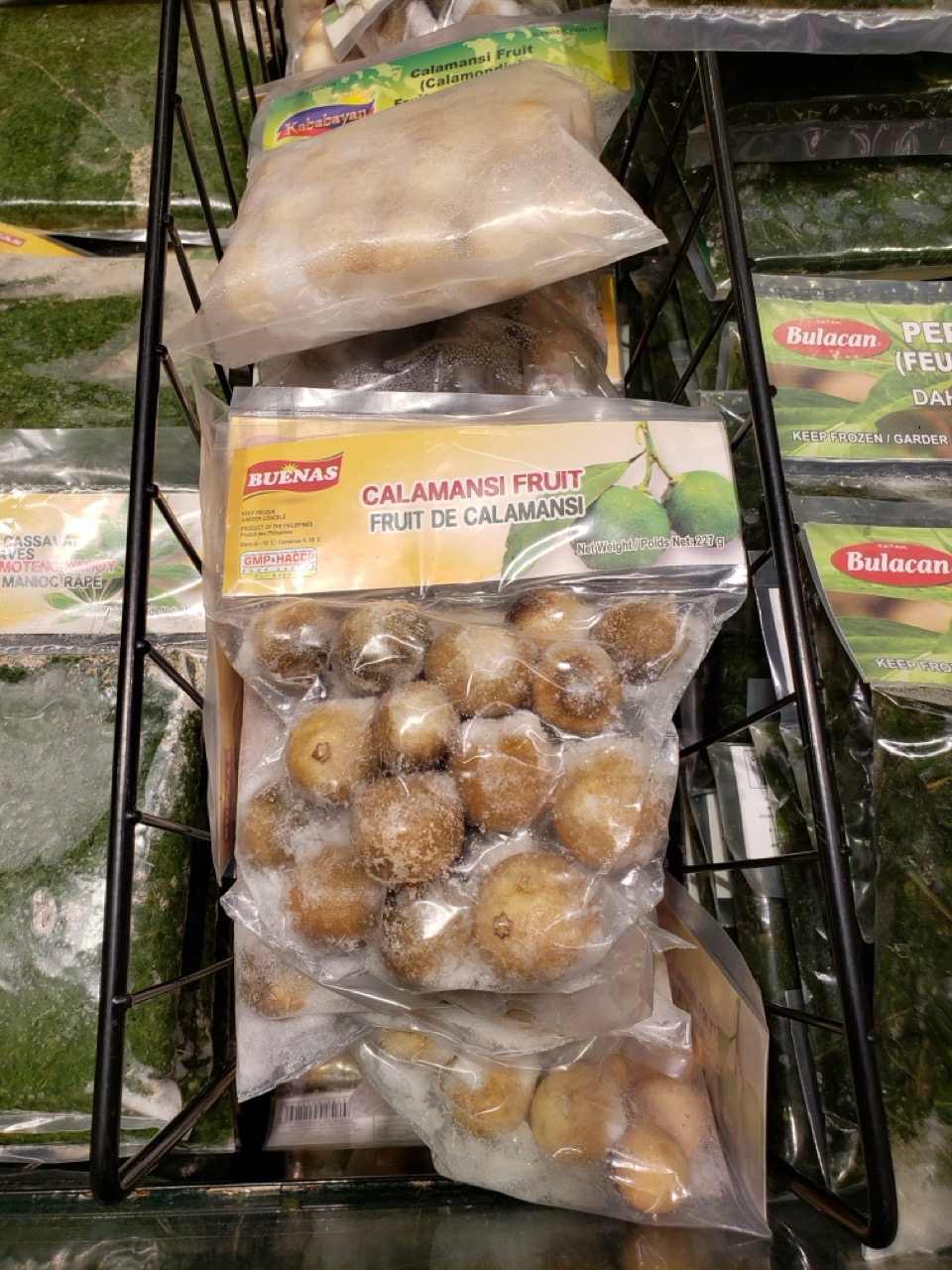
- Calamansi are also not that easy to track down in Toronto, so it was a hard sought out ingredient! I ended up using frozen imported calamansi I had sourced from Nation’s Experience (and boy, what an experience!). Rather than try and describe it myself, I might just copy their own description: ‘foodertainment’. ↩︎
- It is so old that versions of it exist across almost all cultures — in Western cultures, funnily enough, a lot of these versions have to do with knives, swords, or other sharp accoutrements. For example, the paradox of Grandfather’s axe where the handle and the blade have long been replaced. ↩︎
- A fun example is when the Ship of Thesesus paradox is applied to bands. The Sugababes have over the years replaced all of their original members — are they still the Sugababes? Making it even more trippy, the original members have since reformed. Are they the Sugababes? Have we somehow ended up with two Sugababes?? Luckily for us, we no longer need to live in suspense; a court in the UK ruled that the original members could reclaim the name. ↩︎
- Other ports in the British Empire that received significant Baghdadi Jewish immigration includes Shanghai and Hong Kong. ↩︎
- Maghain Aboth is the oldest synagogue in Southeast Asia, and where I had my bar mitzvah. ↩︎
- While researching for this blog post, I was saddened to see that Joan Bieder had recently passed away. ↩︎