Update: This blogpost has been getting a (minor) amount of attention over on Hackernews and Metafilter. I took a moment in a new blogpost to go through some of the comments.
One of my favorite recipes for challah does not tell you how much flour to use.
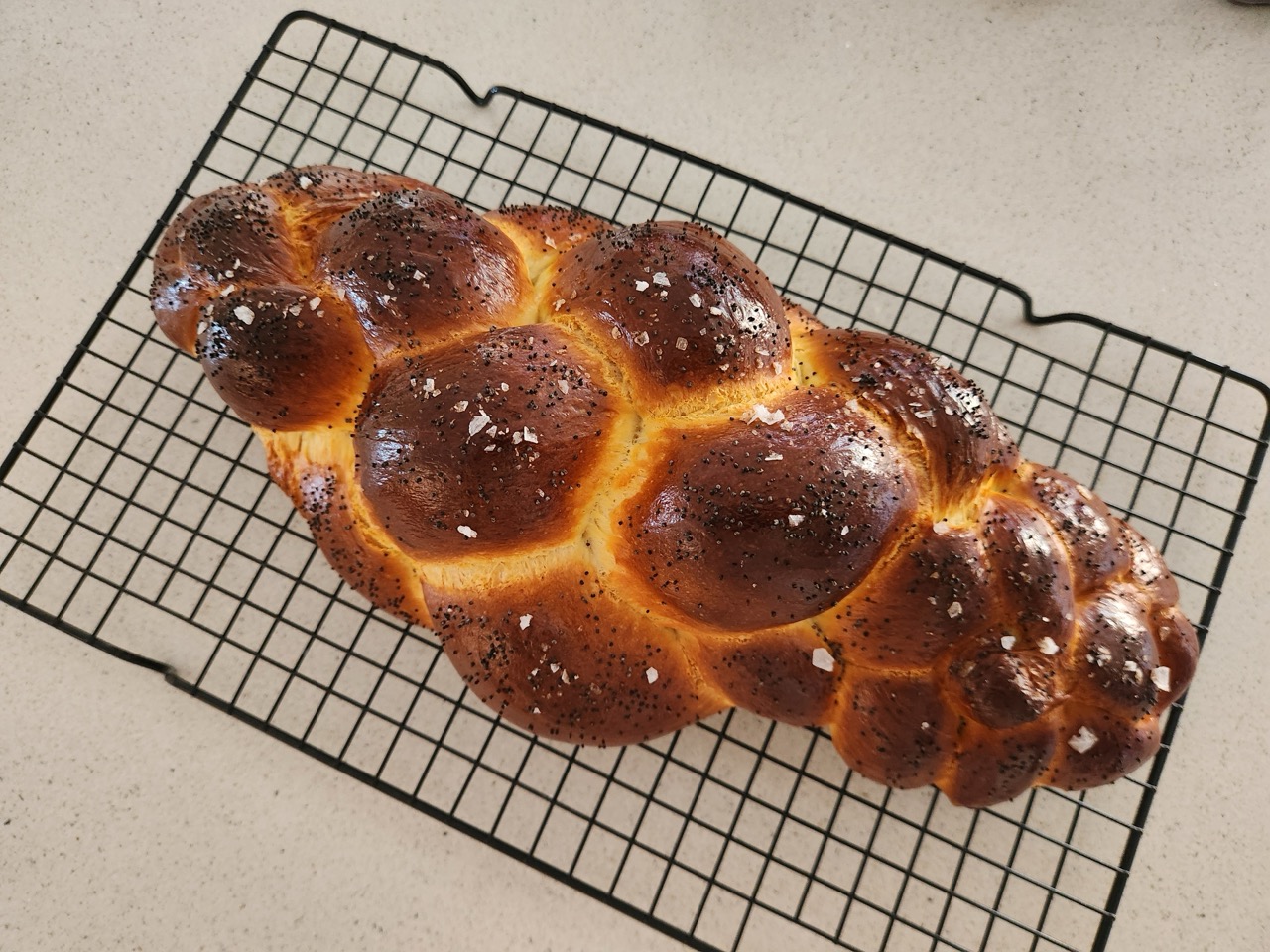
To a modern amateur baker, this omission borders on heresy. In an era where we measure yeast to the gram, a recipe that merely offers a rough estimate and casually instructs you to “add flour until the dough feels tacky” sounds daunting. But it is an honest reflection of how the bread is personally made: adding flour, half-a-cup at a time, until the dough hits that specific, tacky resistance. Surprisingly, the total volume can vary quite significantly. Depending on the ambient humidity or the specific ash content of the grain, the total volume of flour I need can swing by as much as a full cup. Yet the resulting loaf is always nearly identical: a crunchy crust yielding to a practically weightless, fluffy interior.
When I wrote the recipe down for my website, I was deeply tempted to type out an exact quantity of flour to the gram (it’s not a real recipe if it’s inexact! my inner monologue reasoned). But that simply would not be a true representation of my bread. Instead, leaving the measurement open acknowledges something that decades of food media and cooking culture has inadvertently engineered out of us: the kitchen is a biological environment. Cooking is a deeply personal experience, and culinary precision is no replacement for intuition.
If you spend enough time in the bread-baking corners of the internet, you will inevitably encounter the baking spreadsheet1. They arrive as dizzying, hyper-optimized grids dictating exact inoculation rates, ambient room temperatures, and precise bulk-fermentation windows mapped out to the minute. At first glance, they appear bewilderingly rigorous — applying the kind of telemetry one might reserve for a low-earth orbit satellite — but under the hood, they are simply dressing up centuries of culinary intuition, building on mathematical frameworks like the baker’s percentage.
It is easy to see how we arrived at the spreadsheet if you look at the evolution of the recipe itself. For most of history, recipes were incredibly short and concise. Handed down orally, they assumed a wealth of existing cookery expertise. They offered lists of ingredients with no exact amounts, vague timings and temperatures, and steps so terse you can only assume the intended reader was already deep in the cooking trade. We can see great examples of this in historical texts — from the ancient Roman On the Subject of Cooking to the medieval English The Forme of Cury2.
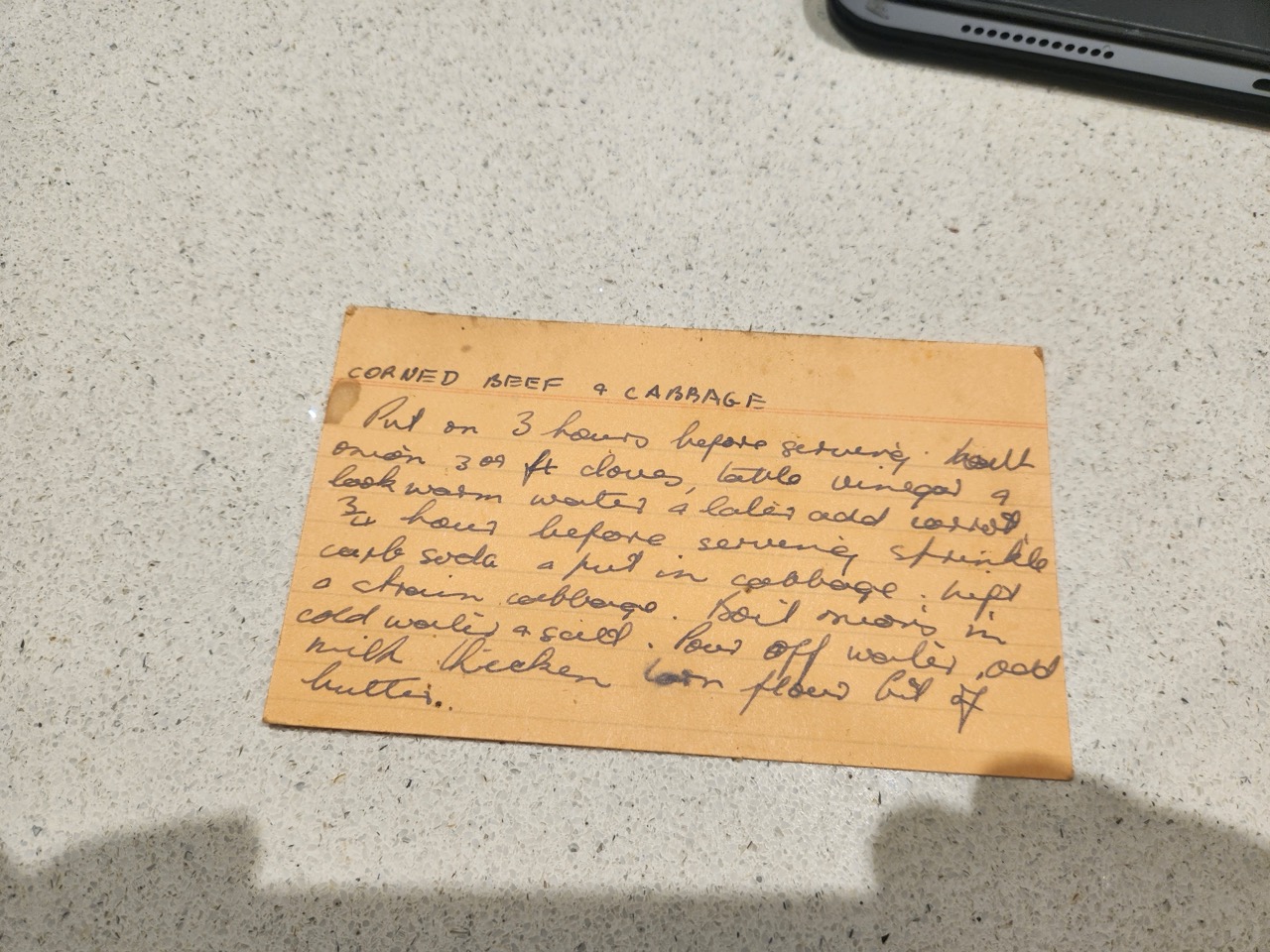
Several changes began to appear in the 19th century, bringing the recipe closer to its modern incarnation. Eliza Acton’s Modern Cookery was the first cookbook to look recognizable to our modern eyes, introducing ingredient amounts and cooking times (albeit, listed after the steps)3. This was a strangely innovative addition, one noticed by reviewers of the time who praised the “foundational chemical principles” and “the intelligibility of the instructions.” This march continued until the dawn of the twentieth century, when pioneers like Fannie Farmer of the Boston Cooking School revolutionized domestic life. Farmer championed standardized volumetric measurements, arguing that cooking should be treated as a precise science rather than a guessing game4.
What caused this sudden shift? It was likely driven by a collision of cultural forces. Recipes were increasingly being written for amateurs rather than professionals, meaning authors could no longer rely on the institutional knowledge of the reader. Concurrently, the industrial revolution and the rising prestige of the scientific method placed a new premium on empirical precision. Throw in growing government oversight of the food industry, and a burgeoning home-economics movement that prized predictability — aiming to elevate women from the “private sphere” into the “public sphere” by reinterpreting cooking as a legitimate science — and the stage was set for a culinary revolution5.
Over the decades, recipes became increasingly detailed. This march toward absolute culinary certainty reached its zenith in the last twenty years, when the kitchen was fundamentally reimagined as a laboratory. You can chart this intellectual shift back to Harold McGee’s seminal On Food and Cooking, but the movement truly accelerated in the 2010s. Nathan Myhrvold released Modernist Cuisine, a 2,400-page encyclopedia that used centrifuges and homogenizers to decode the physics of food. Tools like immersion circulators and sous-vide machines became commonplace, allowing cooks to hold food at precise temperatures for hours in water baths. Sites like The Perfect Loaf applied an analytical, highly systematized approach to the deeply temperamental art of sourdough.
By mapping out the exact thermal dynamics of a steak or the hydration mechanics of a dough, this era made the previously ineffable magic of the kitchen substantially more reproducible. It demystified the magic, provided scientific frameworks, and most of all, made cooking accessible — and for that, we should be genuinely grateful.
But it also accidentally created a generation of cooks paralyzed by precision. I find it funny whenever I painstakingly measure water out to exactly 426g just because a recipe told me to, my anxiety spiking if the digital scale accidentally flickers to 427g. We have become terrified to deviate from the written instructions, fearing that a single gram will ruin the bake — getting the scale to the exact gram is almost an insurance policy (it’s not my fault that it didn’t work, it’s the recipe!) . But we forget that our kitchen is a living, breathing environment, not a laboratory clean room. That flour is an agricultural product, not a synthetic chemical. Its moisture content, protein level, and enzymatic activity change from country to country, and even from season to season. Blindly executing a command to add exactly 426g of water on a humid summer day with the wrong type of flour might leave you with a puddle.
We forget this because the modern kitchen gives us a false sense of absolute control — a bizarrely recent luxury that I read about recently in Bee Wilson’s history of cooking, Consider the Fork6.
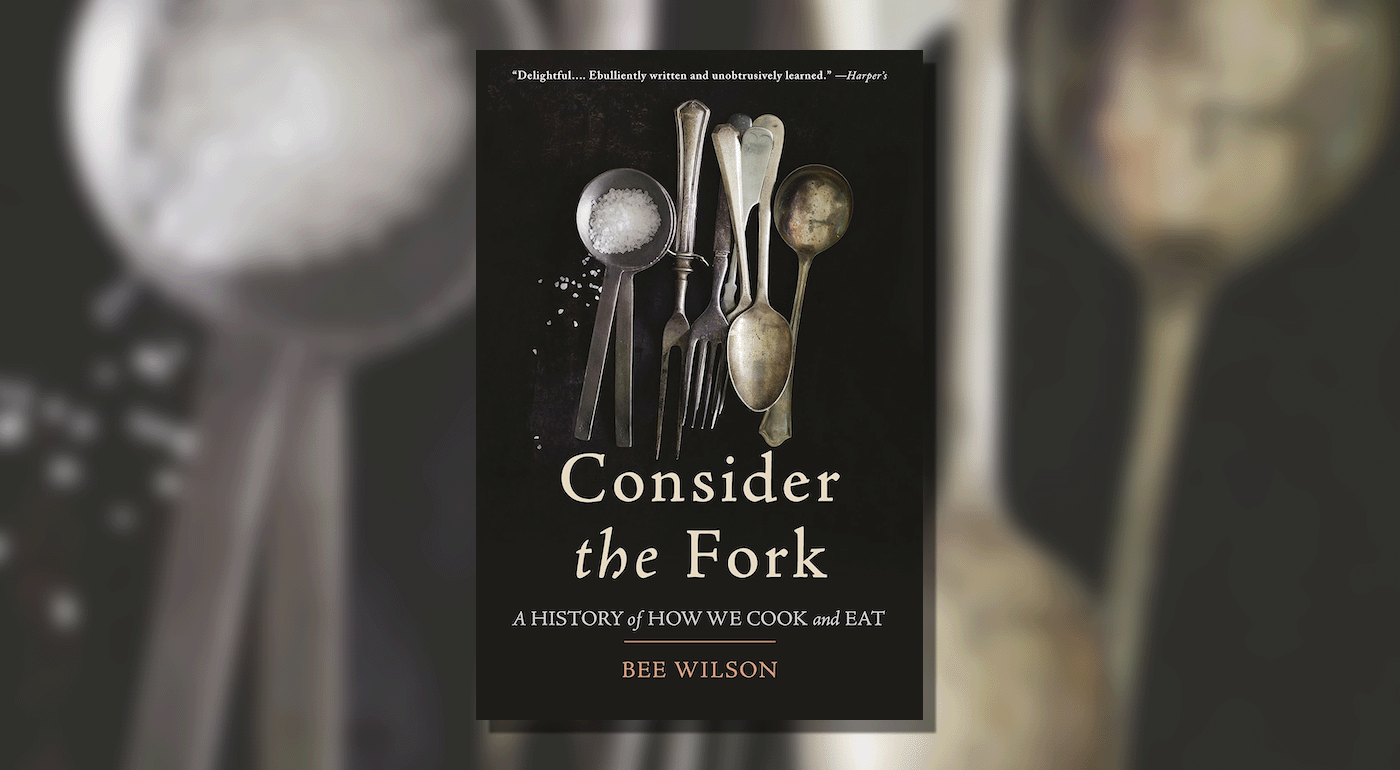
As Wilson traces in her book, the illusion that we can perfectly control our culinary environment is barely a century old. Today, we casually preheat our ovens to 175°C and trust that it will hold there7. But the thermostatically controlled oven didn’t even enter the consumer market until the 1920s with the Lorain Oven Heat Regulator — prior to this, you may have determined the temperature of a wood-fired oven by roughly how long you heated your oven, by throwing in some flour and seeing how long it took to burn, or perhaps by thrusting your bare arm inside and counting how many seconds you could hold it there before the pain forced you to pull away. Recipes often didn’t even provide temperatures (if you were lucky they might have given a vague description such as ‘weak heat’, as per the 1553 cookbook Das Kochbuch by Sabina Welserin).
Because historical cooks — largely working-class women operating in rudimentary hearths — could not rely on static environmental variables, they had to rely on experience and intuition. They didn’t have digital thermometers or electric timers, so they knew a dough was ready because it felt right — perhaps like an earlobe, or a soft shoulder. They adjusted the water not based on a calculated hydration percentage, but because it had rained that morning and the flour felt damp in the bin.
Viewed through this lens, the modern illusion of control shatters, but something much more liberating takes its place. The recipe is a suggestion. The rules of baking — baker’s percentages, hydration levels, the established ratio of flour-to-water-to-fat — are the underlying framework. This is the scaffolding.
My mother always claimed she was a terrible cook. She possessed a deep, enduring culinary anxiety, convinced she lacked whatever innate magic made food taste good (and as a result often hated cooking due to a fear of getting it wrong). The irony, of course, was that her food was always delicious; her problem wasn’t a lack of skill, but a lack of certainty. She wanted a formula, a guarantee.
Naturally, she had never attempted to bake bread.
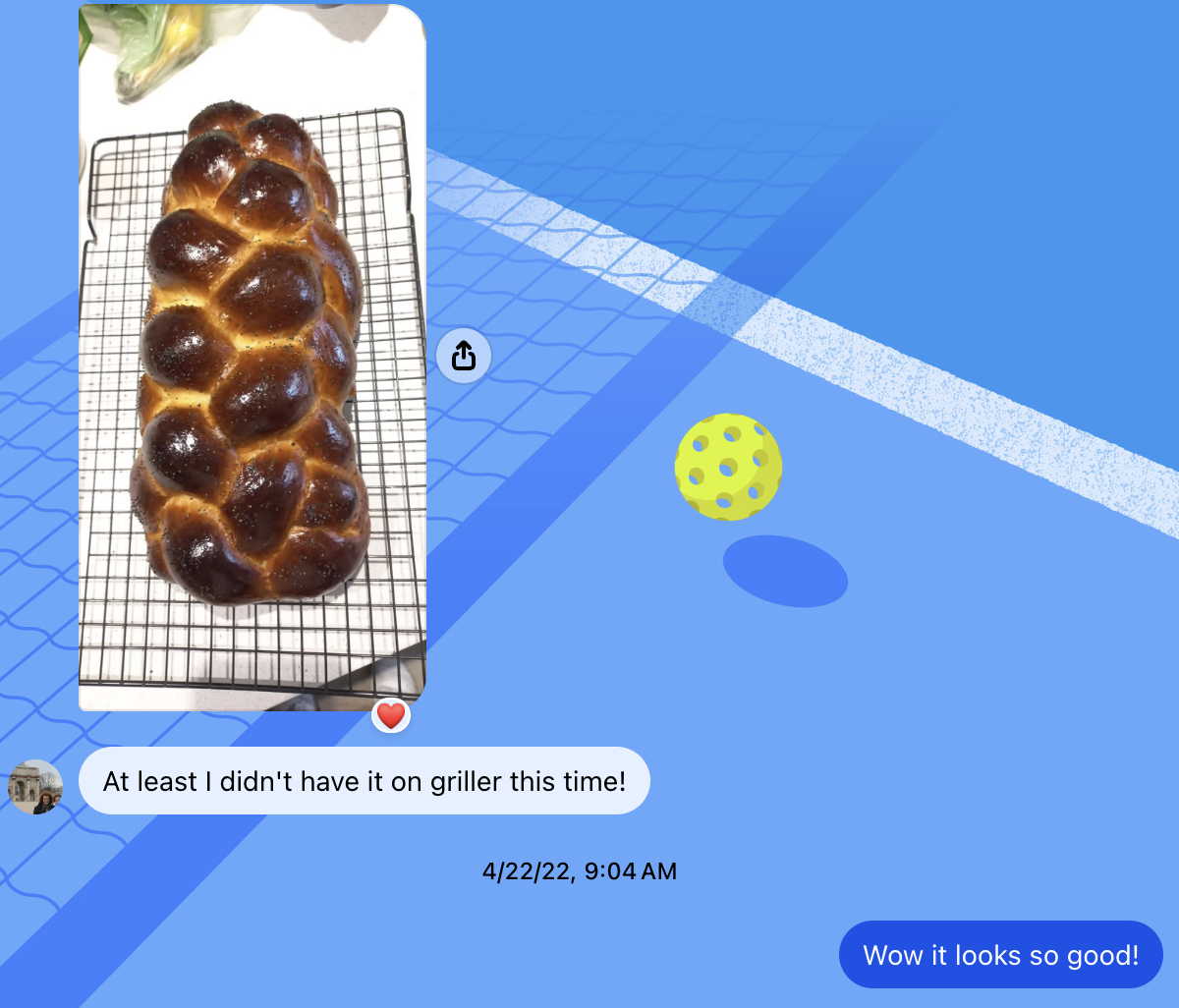
That changed in 2020. During the lockdowns, while I was stuck in Perth, I resolved to teach her how to make that exact challah recipe together8.
To someone already anxious in the kitchen, a recipe that refuses to give you exact measurements is daunting. Because I couldn’t always measure her ingredients for her, she had no choice but to learn how to feel them. Week after week, we would mix the dough together. She learned to add a handful of flour, knead, and wait for that specific, tacky resistance. She learned the rhythmic, meditative motions of a six-strand plait (“end to the center, replace with the second-from-the-end on the other side” we would repeat together). I came to deeply love making challah with her, watching her gradually realize that she didn’t need a rigid recipe to make something delicious.
This philosophy — trusting your senses over a strict set of instructions — extends far beyond the oven. It is the core of how we actually cook. If you look up five different highly rated recipes online for a classic dish, you quickly realize that the rigid lists of ingredients are just suggestions. As I wrote recently regarding the endless internet wars over authentic carbonara, this isn’t about one version being the ‘correct’ one. Different choices simply create delicious variations. Today, I tend to ‘average’ recipes from my cookbook collection rather than following one to a tee, swapping out ingredients and herbs for ones I have on-hand.
The framework is what matters: you fry your aromatics, bloom some spices, add a liquid, and simmer. You can see this at-work in Sohla El-Waylly’s video series, Off-Script with Sohla — rather than teaching an explicit recipe for a braise, she exposes the underlying mechanics so you can riff on them endlessly with whatever is wilting in your crisper drawer. She isn’t teaching you a formula; she’s teaching you the framework.
I’ve begun adopting this approach on my own website through what I call “choose your vibe” blueprints. When I write a recipe now — whether it is for a Basque cheesecake or a comforting one-pot chicken and rice — I try to present it not as a strict command, but as a modular guideline. It is an invitation to look at what you have, trust your palate, and adapt.
The science and the art of the kitchen were never meant to be locked in a zero-sum battle. The analytical approach gave us the vocabulary to understand why our food behaves the way it does. But it is our intuition — our willingness to feel the dough, to taste the sauce, to embrace the chaotic, living variables of our own kitchens — that elevates it all back to an art.
My mother passed away from cancer earlier this year. When I think of her now, I don’t think of the culinary anxiety that plagued her for so long. I think of those weekends in 2020. I think of her hands working the dough, finally trusting her own intuition over a set of written instructions.
A recipe is a wonderful place to start. But eventually, you have to close the laptop, put your hands in the flour, and see how it feels.
- A similar phenomenon is the ice cream spreadsheet, which allows you to play with variables such as the number of eggs (or other stabilizers), and milk and cream volume, to see the resulting parameters like total fat and non-fat milk solid percentages. ↩︎
- Check out the recipe for “macrows” in The Forme of Cury, and read through its scant two sentences a few times. It looks a lot like an early recipe for macaroni and cheese! ↩︎
- Modern Cookery contains the first written English recipe for “sparghetti,” or as it is cutely called, “Naples vermicelli”. ↩︎
- Fannie Farmer was known as the ‘mother of level measurements’ for her strict insistence on leveling off measuring cups with a knife. ↩︎
- You can read more about the forces in play in this wonderful r/AskHistorians post ↩︎
- I can’t recommend this book enough — this is more than just a history of kitchenware. This is an exploration of how kitchenware has shaped us. ↩︎
- Our trust here is often misplaced. I encourage everyone to buy an oven thermometer to see just how much oven temperatures can fluctuate! ↩︎
- Funnily enough, I actually got into bread-baking and sourdough in December 2019, just before the pandemic bread-baking craze. I was stuck at home over the Christmas holidays with a bad flu, a new Le Creuset dutch oven, and the audacity to think ‘this looks easy’. ↩︎