Duck paitan ramen
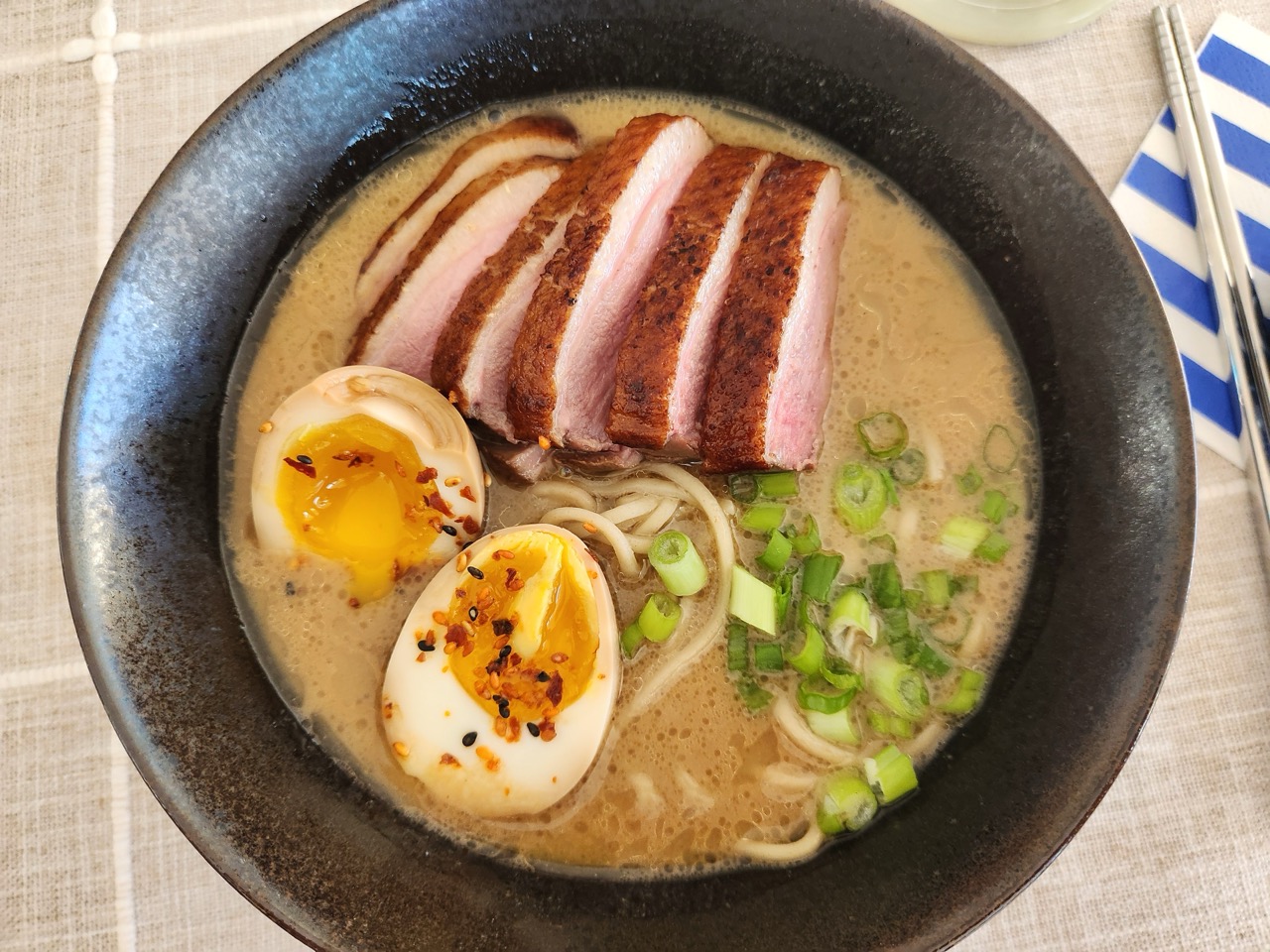
As I don’t eat pork, the creamy tonkotsu ramen has always been an alluring mystery to me (until I had my first tori paitan at Ginza Kagari Honten in Tokyo). This duck paitan ramen came from an urge to create my own paitan ramen at home from scratch (including the noodles), and use my favourite protein — duck.
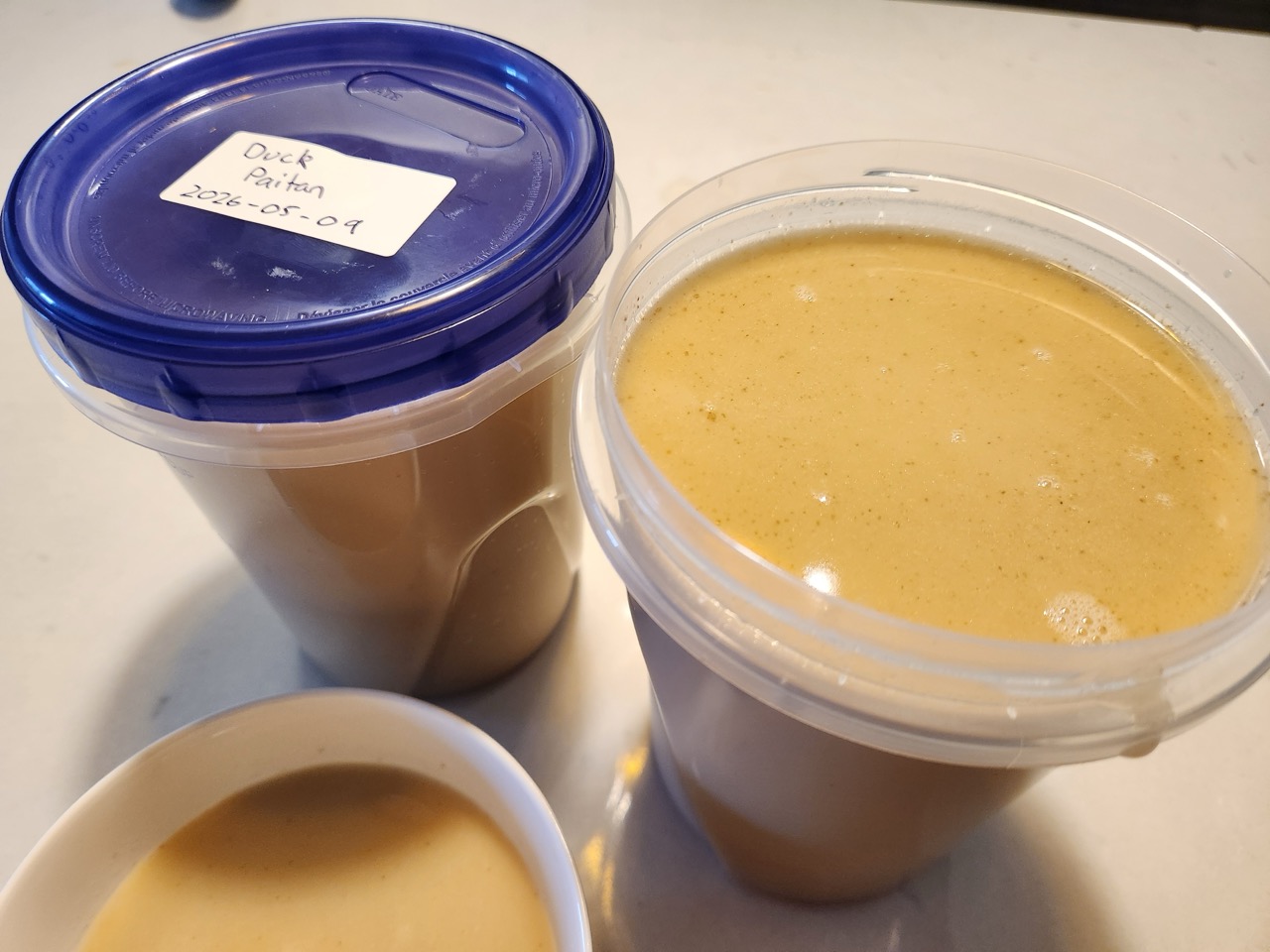
The base for this duck paitan used the leftover duck carcass from R&D’s Cantonese roasted duck, which had been sitting in my freezer since my birthday. While subtle, I liked to think it imparted a hint of roasted hoisin sauce flavour to the broth. The mandarin-flavoured duck fat adds an additional dimension, and helps to cut through the richness of the broth.
This recipe was loosely inspired by the Peking Duck Ramen from The Art of Escapism Cooking, the Duck Paitan Ramen from Motoki Ramen Academy, and both the Tori Paitan and Duck Shoyu from Homemade Ramen.
INGREDIENTS
- 2L duck paitan
- 180ml shoyu tare
- 780g handmade ramen noodles
- Pinch of white pepper
Aromatic duck fat
- 100ml duck fat
- 1 mandarin peel (thinly sliced)
- 1/2 inch ginger (thinly sliced)
Sous vide duck breast chashu
- 3 duck breasts
- 200ml soy sauce
- 15g sugar
Toppings
- 6 soy sauce eggs (ajitama)
- Spring onions
- Furikake
STEPS
Aromatic duck fat
-
In a small saucepan over medium heat, melt the duck fat. Add the sliced mandarin peel and ginger, and when it starts to simmer turn the heat down to low. Leave to simmer for 45 minutes to 1 hour. Remove from the heat and let steep for another 15 minutes.
-
Using a spoon, carefully mash the mandarin peels to release more flavour. Strain the duck fat using a fine-meshed sieve, and store in the fridge in an airtight container.
Sous vide duck breast chashu
-
Mix the soy sauce and sugar, and marinade the duck breasts for 1 hour.
-
After 1 hour, vaccuum seal the duck breasts, and sous vide for 1.5-2 hours at 62.5ºC. When done, remove, pat dry, and place in the fridge in an airtight container.
Ramen construction
-
Warm the serving bowls. Fill each bowl with hot water, and microwave for a couple of minutes (or, place the bowls in an oven preheated to its lowest temperature and turned off).
-
In a heavy cast iron pan, sear the duck breasts skin-side down for 3-5 minutes, until browned and crispy. Flip, and sear the other side for 1-2 minutes. Remove from the pan, and thinly slice. Optionally, using a kitchen torch lightly sear the slices of duck breast.
-
Slice the soy sauce eggs in halve, and sprinkle some furikake on each half.
-
Bring the duck paitan to the boil in a saucepan. If the emulsion has weakened or broken, blitz it several times with an immersion blender.
-
To cook the noodles, add them to a pot of unsalted boiling water, and agitate them with chopsticks to ensure they don’t stick together. Boil for about 1 minute and 30 seconds, drain, and rinse off the excess starch with cold water.
-
While the noodles are cooking, rinse out each bowl, and add 30ml (2 tbsp) of shoyu tare, 15ml (1 tbsp) of the aromatic duck fat, and a pinch of white pepper to each bowl. Add 300ml of boiling stock to each bowl.
-
Drain the noodles, and rinse them quick with cold water. Add the noodles to each bowl, shaking them slightly with chopsticks before lifting them up and performing 1-2 folds to form a platform for the toppings.
-
Place the sliced duck chashu, soy sauce eggs, and spring onions on top.